Quick answer: In Seattle, most residential automatic driveway gate installations run between $3,500 and $14,000 installed, depending on gate type, material, and access control. A basic single swing gate with an operator starts around $3,500–$6,500; a custom fabricated steel or iron gate with full access control typically lands between $7,000 and $14,000; ornamental iron and large estate or HOA systems run $14,000 to $60,000+. Every project is different — the only accurate number is a written quote after an on-site measure, which we provide free.
Cost by gate type (Seattle market, installed with operator)
- Single swing: $3,500 – $7,500 — level driveways with room for the leaf to travel
- Double swing: $4,500 – $11,000 — wide, level approaches; premium dual-swing systems with full access control run higher
- Sliding: $5,000 – $13,000 residential — sloped or short driveways, tight lots; heavy commercial slide systems (16–40 ft) run $13,000 – $38,000
- Cantilever: $6,500 – $14,000 — long spans, gravel drives, heavy daily use
National averages run lower ($1,525–$5,135 per industry data), but Seattle labor rates, wet-season footing requirements, and custom fabrication put most local projects in the ranges above. Slide gates typically cost 20–35% more than comparable swing gates because of the heavier motor, track foundation, and additional concrete work.
The four price tiers in practice
- Tier 1 — Basic single swing, aluminum, keypad entry: $3,500–$6,500. Flat driveway, clear post placement, power nearby. Common in Auburn, Lakewood, and Lynnwood.
- Tier 2 — Dual swing or single slide, steel, keypad + intercom: $7,000–$14,000. Adds a video intercom, second operator or slide track, conduit runs, and battery backup. Typical for Bellevue and Gig Harbor homes.
- Tier 3 — Ornamental iron or bi-parting slide, full access control: $14,000–$28,000. Custom-welded iron or heavy-gauge steel, commercial-duty operator, app-based access, dedicated circuit.
- Tier 4 — Estate and HOA systems: $28,000–$60,000+. Telephone-entry systems, multiple vehicle loops, pedestrian gates, backup power, and maintenance agreements.
Cost by material
- Steel (powder-coated): the Seattle workhorse — handles rain and daily use; mid-range pricing.
- Ornamental iron: the premium look for estate properties; upper range. Custom and arched designs raise panel cost significantly.
- Aluminum: best near water (no rust); mid-to-upper range and the usual Tier 1 choice.
- Wood or wood-insert: warm Northwest look on a steel frame; mid-range, needs more maintenance.
The factors that move your price
- Driveway slope and layout — a graded drive usually rules out a swing gate and calls for a sliding or cantilever system. Hilly lots in Magnolia, Queen Anne, and Gig Harbor often need custom arm geometry or grade correction ($500–$2,000).
- Opening width — wider spans need heavier frames and stronger operators; every additional foot adds panel cost and torque requirements. Over ~24 ft, slide gates usually become the cost-effective choice.
- Operator (motor) and duty cycle — sized to the real weight and daily cycles of the gate, not a brochure. Undersized operators are the #1 repair call we see; for gates seeing 30+ cycles a day, specify a high-cycle commercial unit.
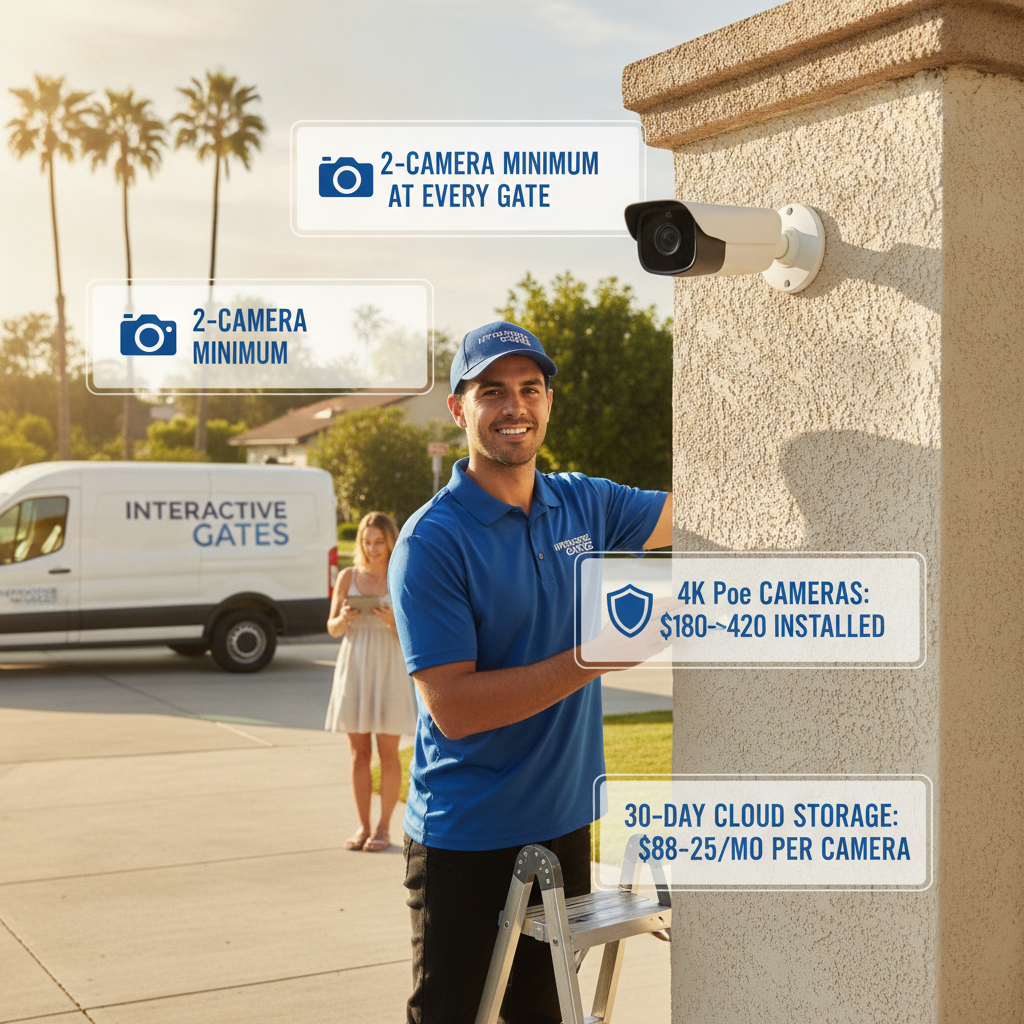
- Access control — keypad, card reader, video intercom, or app entry ($250–$4,500 depending on the system).
- Site work and electrical — footings below the frost line, drainage, and conduit. A standard buried conduit run costs roughly $12–$22 per linear foot; long rural runs in rocky ground cost more. Clay-heavy soils (common in Bellevue, Kirkland, and Mercer Island) need wider, deeper footings than sandy lots in Auburn or Lakewood.
- Corrosion protection — with 150+ rainy days a year and marine air near the Sound, powder-coat upgrades, sealed motor enclosures, and stainless hardware add roughly $400–$1,100 upfront and are the best way to protect the investment.
- Permits — required in virtually every Seattle-area jurisdiction for an electrified gate (details below). We handle the paperwork.
Permits in Seattle, King, Pierce and Snohomish County
Gate permit fees across the metro typically run $150–$480 depending on jurisdiction — Seattle proper sits near the middle of that range, while Bellevue and Kirkland trend higher when a gate touches a shared easement or HOA boundary. Some jurisdictions add a separate electrical permit ($100–$250). Permits are required when the gate is electrified (virtually every automatic gate), exceeds 6 ft, sits on a corner lot with sight-line rules, or serves a shared driveway easement. Review timelines range from under two weeks in faster offices to 3–6 weeks in Snohomish County or during busy construction seasons. We pull the permits as part of every project — see our gate permit guide for the full jurisdiction-by-jurisdiction breakdown.
Which gate operator brands hold up in Seattle's climate?
Seattle's real enemy isn't cold — it's sustained moisture and salt air near Puget Sound. How the major brands perform here:
- LiftMaster: the most-installed residential brand in the metro. Sealed housings, 24V DC operation, parts stocked locally (fast repair turnaround). The safe default for most homes.
- FAAC: the premium pick for heavy gates, steep driveways, and high-cycle commercial use — hydraulic actuators handle slope and moisture exceptionally well. Costs more upfront, lasts longer with annual service.
- Viking: strong commercial and HOA tier with sealed, marine-rated enclosures — well suited to exposure zones around the Sound.
- Apollo: budget-friendly for low-traffic residential gates (under ~20 cycles/day); not recommended for heavy gates or busy entrances.
Pro tip: within a half-mile of the water — West Seattle, Gig Harbor waterfront, Point Defiance — always specify stainless fasteners and marine-grade powder coat. Standard zinc hardware can show rust within 18 months there.
How your neighborhood changes the quote
- Bellevue / Redmond (Eastside): high HOA density and stricter plan review; clay soils mean deeper footings. See our Bellevue page.
- Seattle proper (Magnolia, Queen Anne, Ballard): steep lots, older electrical panels, closer permit scrutiny — budget extra site prep. See our Seattle page.
- Gig Harbor / Tacoma: marine corrosion risk and long driveways with extended electrical runs. See Gig Harbor and Tacoma.
- Snohomish / Everett / Lynnwood: clay-heavy soils, rural conduit runs, and slower county permit timelines — start early. See Everett and Lynnwood.
- Auburn / Lakewood: flatter terrain and the most cost-predictable installs in the metro — typically the lower end of each range.
We serve the full metro — see our King County, Pierce County, and Snohomish County service pages.
HOA and commercial entrances
Community and commercial entrances carry cost layers residential projects don't: wider bi-parting slide configurations, telephone-entry systems with 100–500 user capacity, paired vehicle loops with anti-tailgate logic, and commercial-duty operators rated for 800+ cycles a day. A fully equipped HOA entry system in the Seattle metro typically lands between $22,000 and $55,000. Fire-department access requirements (Knox Box, key switch, or Click2Enter) are planned and tested as part of the project. Full breakdown on our commercial & HOA gate page.
What's included in an Interactive Gates quote
Many installers charge $75–$150 for a site assessment. Ours is free: on-site measure, written fixed price (no phone ballparks, no second invoice), permits handled, fabrication in-house, installation by our own crew, programming of every remote and code, and a 10-year warranty on new installations. 5.0 rating on Google.
How long does it take?
On-site installation runs 1–3 days for most residential projects: posts and concrete, then gate hanging and wiring, then access control, programming, and walkthrough. Start to finish — permits, in-house fabrication, and installation — plan on 3–8 weeks depending on jurisdiction and how custom the gate is.
Financing
Don't want to pay it all at once? 0% interest financing up to 36 months is available. See financing options.
See your gate before you buy
Not sure which style fits your home? Try our free online gate designer — upload a photo of your driveway, preview gate designs on it in seconds, and request a quote on the one you like.
Frequently asked questions
How much does an automatic gate cost in Seattle? Most residential projects run $3,500–$14,000 installed, depending on type, material, and access control. Ornamental iron, estate, and commercial systems run $14,000–$60,000+.
Is a $4,000 quote realistic in 2026? Yes — for a specific scope: single aluminum swing panel under ~12 ft, basic operator, one keypad, short conduit run, flat driveway. Add a steel gate, video intercom, or serious site work and the number rises quickly; if a low quote claims to include those, check what's being left out.
Is a sliding gate more expensive than a swing gate? Usually yes — 20–35% more for a comparable gate, because of the heavier motor, track foundation, deeper footings, and extra labor. It's still the right call on sloped or tight driveways where a swing leaf can't travel; a swing gate forced onto a slope wears out its hinge hardware years early.
Does the price include the gate opener? Industry pricing often doesn't — operators alone run $625–$4,750 depending on brand and duty cycle. Our quotes always include the operator, sized to your gate's actual weight and daily use.
Do I need a permit for a driveway gate in Seattle? In almost every local jurisdiction, yes — electrified gates require permits, with fees around $150–$480 plus an electrical permit in some cities. We pull the permits as part of the project. Details in our permit guide.
Which brand is best for Seattle's wet climate? LiftMaster is the most serviced and parts-available residential choice; FAAC and Viking are better suited to heavy, high-cycle, or sloped applications. Whatever the brand: sealed motor enclosure, marine-grade finish, stainless fasteners.
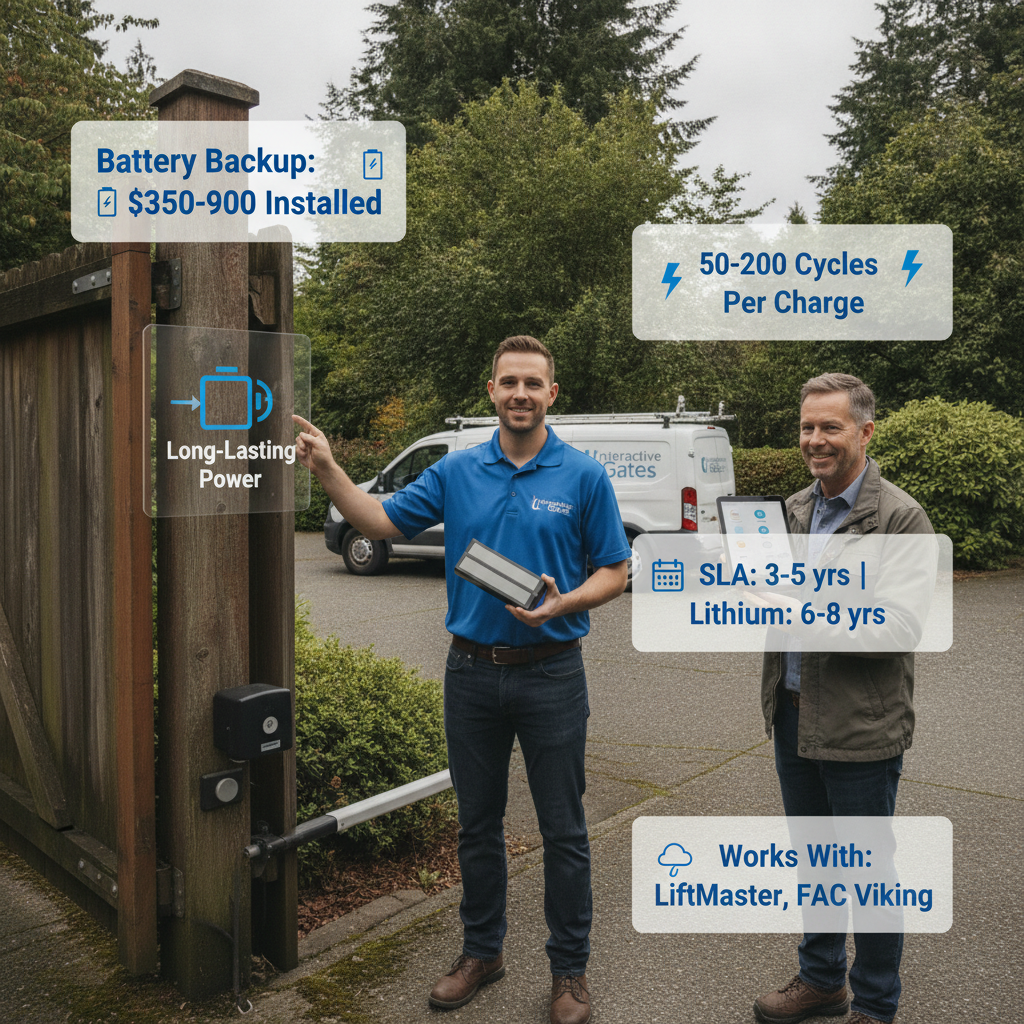
What maintenance should I budget after installation? Annual service on a single-operator residential system runs roughly $185–$380 — lubrication, loop and sensor testing, battery backup check. Skipped lubrication on slide-gate drive hardware is the single biggest cause of premature motor failure in the Northwest.
How long does installation take? 1–3 days on site for most residential projects once fabrication is done and permits are issued; 3–8 weeks start to finish including permits.
Ready for a real number? Call (425) 900-6083 or request your free on-site estimate — we measure, you get a written fixed quote. You can also explore our gate installation service for what a full project includes.