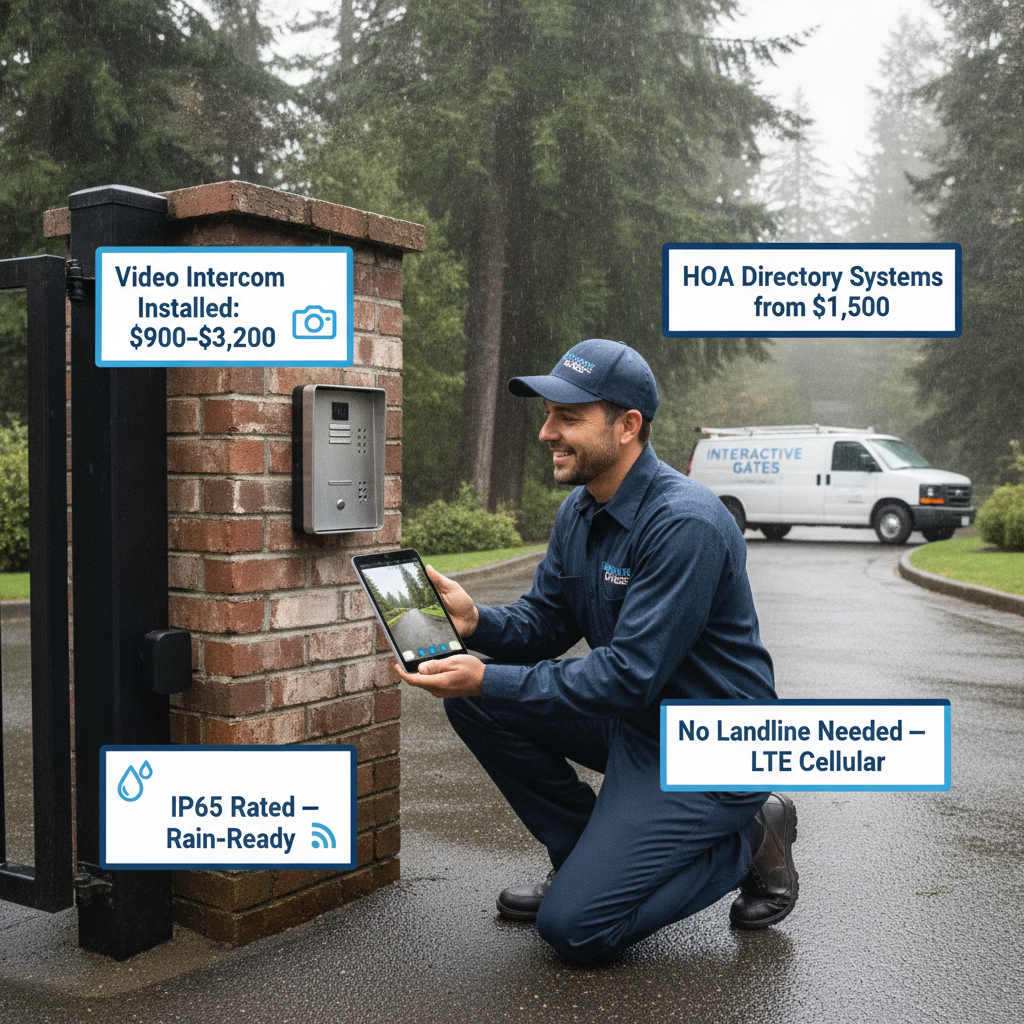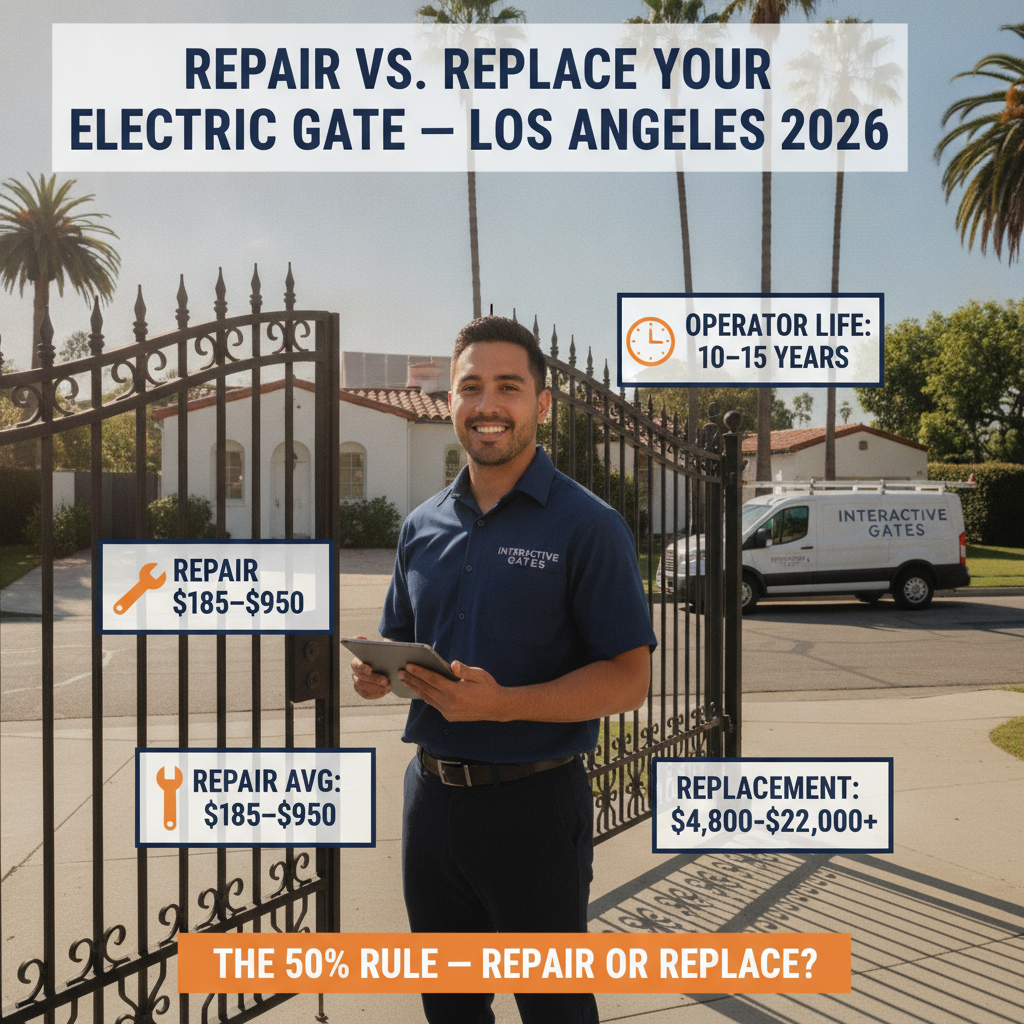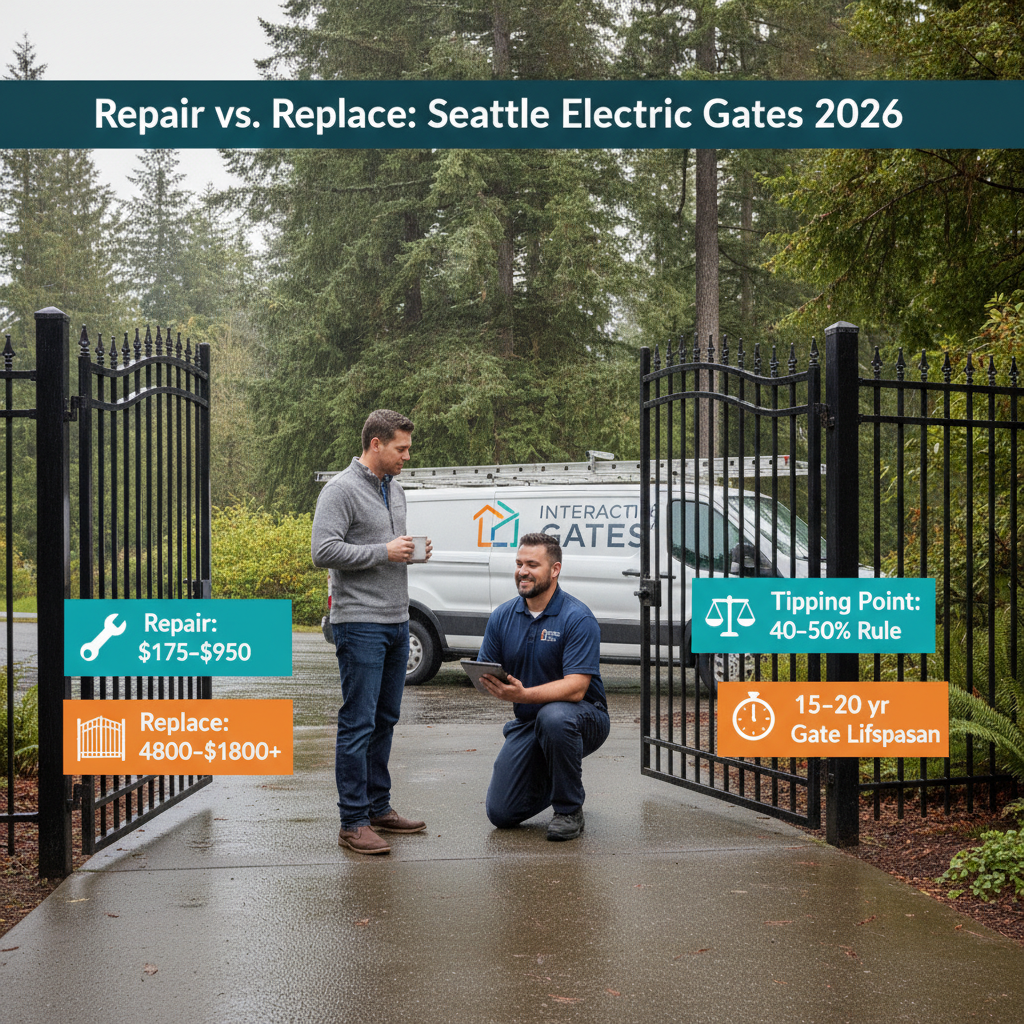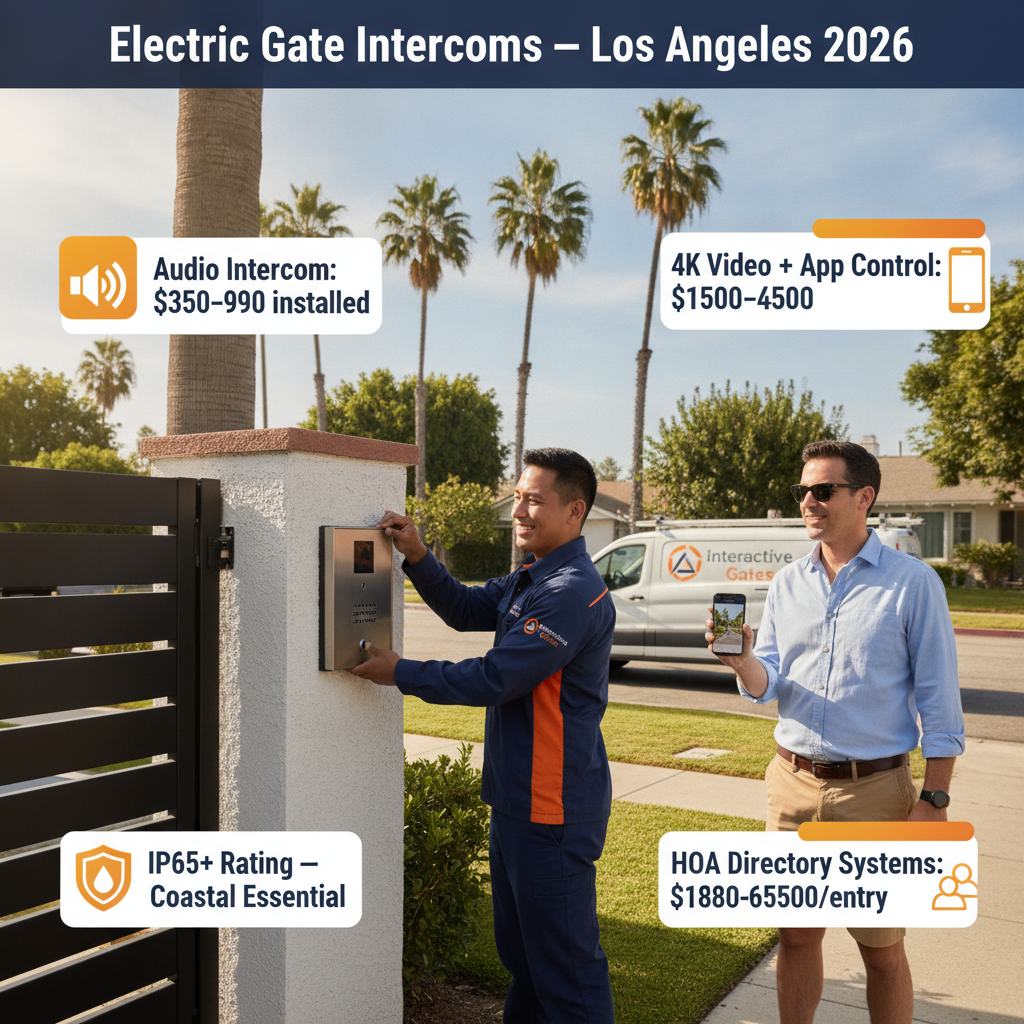
- Basic audio-only intercoms start at $350–$750 installed; video systems with app integration run $1,200–$4,500 depending on camera resolution and cloud storage tier.
- 4K video intercoms (Aiphone IX, 2N Helios IP) are now the SoCal standard for properties over $1M — expect to pay $2,800–$4,500 fully installed.
- LTE/cellular intercoms like the DoorBird D2101V and Doorbell Fon DP38 are ideal for gated driveways without buried ethernet — no trenching cost.
- HOA communities in Laguna Beach, Rolling Hills, and Orange typically require telephone-entry systems (Liftmaster CAPXLV or Linear AE-100) starting at $1,800 installed per entry point.
- Coastal salt air in Malibu, San Clemente, and Redondo Beach degrades unprotected intercom housings in 3–5 years — specify IP65 or higher-rated enclosures.
- Los Angeles County building codes do not mandate intercoms on residential gates, but HOA CC&Rs frequently do — always check your HOA documents before purchasing.
- Two-way video intercoms reduce package theft and unauthorized entry incidents by an estimated 60–70% according to security integrators active in the LA market.
- Wi-Fi intercoms struggle beyond 150 ft of driveway length — switch to PoE (Power over Ethernet) or LTE for driveways longer than that.
What Kind of Intercom Do I Need for My Electric Gate in Los Angeles?
You've finally decided to automate your driveway gate in Pasadena, Laguna Beach, or the hills above Burbank — and now you're realizing the gate opener is only half the puzzle. How does a delivery driver buzz you? How does your housekeeper get in while you're at the office? How do you let someone in from your phone while you're in Palm Springs? These are the questions Los Angeles homeowners, property managers, and HOA boards are typing into Google right now, and the answers have changed significantly heading into 2026. This guide breaks down every intercom type, what it costs installed in Southern California, which brands hold up to the heat and coastal air, and exactly what system fits your property's layout and budget.
What Are the Main Types of Electric Gate Intercoms Available in Los Angeles in 2026?
The intercom market has split cleanly into four categories, each suited to a different property type and budget range in the LA metro:
- Audio-only telephone entry systems: The most affordable and most common on mid-tier residential and small multi-family properties. Brands like Linear, Doorbell Fon, and Liftmaster's CAPXLV line operate over standard phone lines or cellular. Installed cost: $350–$950.
- Wired video intercoms: A dedicated video screen at the gate panel wired back to an indoor monitor or tablet mount. Aiphone JO and Aiphone JP series are the workhorses here. Installed cost: $900–$2,400 for single-family; up to $5,000+ for multi-tenant.
- IP/PoE video intercoms with app control: Camera, speaker, and microphone all on a network — you answer on your smartphone from anywhere. Brands: 2N Helios IP Verso, Aiphone IX-DV, DoorBird D2101V Pro. Installed cost: $1,500–$4,500 depending on camera resolution, cloud tier, and ethernet run length.
- LTE/cellular intercoms (no hardwire required): Operate on the cellular network — no ethernet trench, no phone line. Best for long driveways in Topanga, Altadena, or rural Orange County parcels. DoorBird LTE, Doorbell Fon DP38 LTE. Installed cost: $1,200–$3,200 plus a $10–$25/month data plan.
Pro Tip: If your driveway is longer than 150 feet, skip Wi-Fi intercoms entirely. Signal degradation through concrete pillars, wrought iron, and SoCal stucco walls kills reliability. Choose PoE or LTE and save yourself a callback service visit.
How Much Does a Gate Intercom System Cost to Install in Los Angeles in 2026?
Labor rates in Los Angeles County and Orange County run $95–$165/hour for security and gate intercom technicians in 2026, compared to $75–$110/hour in inland markets. Here's what full installed costs look like broken down by system type:
- Audio telephone entry (analog): $350–$750 installed for a single-family residential driveway gate. Linear AE-100 or Doorbell Fon DF-4 are the go-to units at this price point.
- Audio telephone entry (LTE/cellular): $750–$1,400 installed. No trenching needed but add $10–$25/month for the data SIM.
- Basic wired video intercom: $900–$1,800 installed — includes gate-side panel and indoor wired monitor. Aiphone JO-1FD is a common specification.
- IP video intercom (app-controlled, 2MP–4K): $1,500–$4,500 installed. The 2N Helios IP Verso and DoorBird D2101V Pro sit in the $2,500–$4,000 installed range for most LA single-family installs with a standard conduit run.
- HOA telephone entry (multi-tenant, directory): $1,800–$6,500 per entry point installed. Liftmaster CAPXLV, Linear AXCESS, and Doorking 1837 are standard in gated communities in Rolling Hills, Laguna Beach, and Orange.
- Ethernet/conduit trenching (if needed): $8–$18 per linear foot in LA County. A 100-foot driveway run adds $800–$1,800 to your project.
For a typical Pasadena or Burbank single-family home with a 40-foot driveway, a fully installed IP video intercom with app control runs $2,200–$3,000 all-in in 2026. For a gated estate in Rolling Hills or Bel Air, budget $3,500–$6,500 including a custom pedestal, underground conduit, and cloud video storage setup.
Which Intercom Brands Work Best in Southern California's Climate?
SoCal throws three specific environmental challenges at gate intercoms: intense UV radiation that yellows and cracks plastic housings, salt-laden coastal air that corrodes circuit boards and speaker grilles, and heat — Phoenix-level temperatures in the San Fernando Valley and Inland Empire can push intercom enclosures past 130°F in direct sun. Here's how the top brands hold up:
- 2N Helios IP Verso: IP69K-rated (the highest available), aluminum housing, UV-stable finish. Survives coastal Malibu and Rancho Palos Verdes installs reliably for 10–15 years. Premium price: $600–$900 for the panel alone.
- DoorBird D2101V / D2101V Pro: IP65 stainless steel housing, available in brushed or anodized finishes. Very popular in WeHo, Silver Lake, and Santa Monica modernist architecture. Panel: $350–$550.
- Aiphone IX-DV: IP65, commercial-grade, integrates with virtually any access control system. Standard specification for luxury condo entries and estate gates in Bel Air and Brentwood. Panel: $400–$700.
- Liftmaster CAPXLV: Designed specifically as a gate telephone-entry system with LiftMaster myQ integration. IP54 rating — adequate for inland LA but marginal for front-row coastal. Panel: $280–$420.
- Doorbell Fon DP38 LTE: Budget-friendly LTE unit, IP54, UV-resistant ABS plastic. Best for inland Burbank, Glendale, and Pomona where coastal salt is not a factor. Panel: $200–$320.
For any property within two miles of the coast — San Clemente, Laguna Beach, Malibu, Manhattan Beach — specify a minimum IP65 stainless or aluminum housing. Plastic-bodied units at IP54 or below will show corrosion and speaker degradation within 36–48 months in marine air.
Do HOA Communities in Los Angeles Need a Different Intercom System?
Yes — significantly different. A single-family home needs one visitor to reach one resident. A gated HOA community in Rolling Hills Estates, Orange, or Lake Forest needs every visitor to find any of dozens or hundreds of residents via a directory. That requires a telephone-entry system with a resident directory, not a simple two-way panel. The standard HOA systems in the LA market in 2026 are:
- Doorking 1837 / 1838: The industry standard in Southern California HOA applications. Resident directory, telephone call-out, code access, and loop detector integration. Installed: $2,800–$5,500 per entry point.
- Linear AXCESS AE-100: More affordable entry point for smaller communities (under 50 units). Installed: $1,800–$3,200.
- Liftmaster CAPXLV: Newer platform with cloud-managed directory — residents update their own entry remotely via the myQ Community app. Growing adoption in new-construction HOA communities in Irvine and Chino Hills. Installed: $2,200–$4,000.
- ButterflyMX: Fully cloud-managed, smartphone-first, no physical directory panel required. Popular in apartment and condo applications rather than single-family HOAs. Installed: $1,500–$3,000 per door, but requires reliable building Wi-Fi at the gate.
Most HOA CC&Rs in LA County specify the intercom must allow resident-controlled access without requiring a community manager to update codes manually. Cloud-managed systems like the CAPXLV and ButterflyMX solve that cleanly. Check with your HOA board and review HOA gate system options before committing to a platform — switching costs are high once conduit and wiring are buried.
Pro Tip: Rolling Hills and Rolling Hills Estates have their own community association design standards that may restrict visible camera lenses, keypad styles, and pedestal finishes. Submit your intercom model and mounting spec to the architectural review committee before ordering equipment.
Can I Control My Gate Intercom From My Smartphone in Los Angeles?
App-controlled intercoms are now the default expectation among LA homeowners in 2026, not an upgrade. Here's how the major platforms work in practice:
- DoorBird App (iOS/Android): Live 4K view, two-way audio, relay output to trigger gate opener, motion alerts, and cloud video history (30 days free, longer storage via subscription at $3–$8/month). Works over Wi-Fi or LTE. Response latency in LA is typically under 2 seconds on a solid LTE signal.
- 2N My2N App: Enterprise-grade platform used by property managers overseeing multiple gates across LA County. Supports unlimited devices, remote firmware updates, and integration with Verkada and Milestone VMS platforms.
- LiftMaster myQ Community: Pairs with CAPXLV gate intercoms and LiftMaster gate openers in one app. Residents can issue guest PINs, view logs, and grant time-limited access — ideal for Airbnb hosts in Venice and Silver Lake.
- Aiphone Cloud: Recently launched cloud management for the IX series, popular in Brentwood and Pacific Palisades luxury installs where the local integrator also manages cameras and alarms in a unified platform.
For most single-family LA homeowners, the DoorBird app with a D2101V Pro panel delivers the best balance of hardware quality, app reliability, and price. For HOA and multi-tenant, myQ Community or Doorking's cloud platform is the more scalable choice.
How Do I Add an Intercom to My Existing Electric Gate in Los Angeles?
If your gate opener is already installed and you want to layer on an intercom, the process is straightforward in most cases. An LTE cellular intercom like the Doorbell Fon DP38 or DoorBird LTE can be mounted to an existing post or pedestal without any new wiring — the gate opener's dry contact relay output connects to the intercom's trigger wire (usually a 2-wire 18-gauge run of 10–30 feet), and the intercom calls your phone over the cellular network. Total added cost: $1,000–$2,000 installed on an existing setup.
If you want a wired IP video system on an existing gate, the main cost driver is whether buried conduit is already present. If not, trenching and conduit adds $800–$2,500 depending on driveway length and surface material (asphalt vs. concrete vs. exposed aggregate pavers, which are common in Bel Air and Laguna Beach). See residential gate services for a full picture of what a retrofit installation involves, or browse completed projects in the LA area to see real installs. You can also design your gate and intercom setup visually before committing to a quote.
In One Minute: Gate Intercoms in Los Angeles 2026
Here's the complete picture compressed: Audio-only telephone entry systems cost $350–$950 installed and are the right call for budget-conscious inland properties. IP video intercoms with smartphone apps run $1,500–$4,500 installed and are now the standard for any home above $800K in value. LTE cellular intercoms are the smart choice for long driveways or properties without buried ethernet. For coastal areas from San Clemente to Malibu, specify IP65 or higher rated stainless or aluminum housings — anything less corrodes in under four years. HOA communities in Rolling Hills, Orange, and Laguna Beach need a telephone-entry directory system (Doorking, Linear, or Liftmaster CAPXLV), budgeting $1,800–$6,500 per entry point. App control is now standard — DoorBird, 2N, myQ Community, and Aiphone Cloud are the dominant platforms. If your driveway is longer than 150 feet, always choose PoE or LTE over Wi-Fi. And always verify HOA architectural guidelines before selecting a panel style or finish. For properties in Laguna Beach, Rolling Hills, Orange, San Clemente, or greater Los Angeles, local climate and HOA factors shape your intercom decision as much as budget does.
Frequently Asked Questions: Gate Intercom Systems in Los Angeles
Do I need a permit to install a gate intercom in Los Angeles County?
In most cases, no separate permit is required for adding an intercom to an existing gate in LA County — the intercom itself is low-voltage accessory wiring. However, if a new gate, post, or pedestal foundation is part of the project, the gate structure may require a permit depending on your city's building department. Cities like Beverly Hills and Santa Monica have stricter low-voltage and structural review processes than unincorporated LA County. Always confirm with your local building department before breaking ground.
How long does a gate intercom last in Southern California?
Inland (Burbank, Glendale, Pasadena): 10–15 years for quality IP65+ units with annual cleaning. Coastal (Malibu, Manhattan Beach, San Clemente): 7–12 years for stainless-rated units; 3–5 years for budget plastic-housing intercoms that aren't rated for marine air. UV exposure accelerates plastic housing degradation even inland — budget for enclosure replacement or repainting every 5–7 years on exposed south-facing pedestals.
What is the best intercom brand for a gated estate in Bel Air or Brentwood?
The 2N Helios IP Verso and Aiphone IX-DV are the two most frequently specified brands for LA luxury estates in 2026. Both offer 4K video, IP69K/IP65 ratings, full app control, and integration with professional security monitoring platforms. For truly bespoke installs, 2N's Verso line offers interchangeable module slots — you can add a keypad, fingerprint reader, or RFID card reader alongside the camera in a single flush-mount panel, which suits the clean architectural lines preferred in Bel Air and Pacific Palisades.
Can a gate intercom work with my existing LiftMaster gate opener?
Yes. Nearly all gate intercoms trigger the gate opener via a dry contact relay — the same signal as pressing a remote. Your LiftMaster opener has an accessory terminal block that accepts this trigger. The intercom wires connect to that terminal, and when you press 'open' in the app or on the indoor monitor, the relay closes and the gate opens exactly as if you'd pressed a button. No reprogramming of the opener is needed. LiftMaster's own CAPXLV intercom integrates most seamlessly with LiftMaster openers and the myQ app ecosystem.
How many entry points does my HOA gate community need intercoms at?
Every vehicle entry and exit point that a visitor or non-resident could use needs its own intercom panel and telephone-entry system. Most LA HOA communities have one main entrance with a separate exit loop (no intercom needed on exit-only lanes controlled by loop detector). Secondary pedestrian gates may need a keypad or card reader rather than a full intercom. Budget $1,800–$6,500 per staffed or visitor-facing entry point. Large communities with multiple gates — common in Rolling Hills Estates — sometimes budget $15,000–$30,000 for a full intercom and access-control upgrade across all entry points.
Is Wi-Fi reliable enough for a gate intercom on a long Los Angeles driveway?
For driveways under 100–120 feet with clear line-of-sight to the router, Wi-Fi is workable but not ideal — concrete pillars, wrought iron panels, and stucco walls all degrade the signal. For anything over 150 feet, or where the gate is around a curve from the house, use PoE (Power over Ethernet with a buried Cat6 run) or an LTE cellular intercom. The $10–$25/month LTE data cost is far cheaper than repeated service calls for a Wi-Fi intercom that disconnects during peak network congestion.
Ready to Choose Your Gate Intercom?
Whether you need a simple audio buzzer for a Burbank bungalow, a 4K video panel for a Laguna Beach estate, or a full HOA telephone-entry system for a gated community in Rolling Hills, the right system depends on your driveway length, climate exposure, HOA requirements, and how you want to manage access day-to-day. Reach out to the Interactive Gates team for a no-pressure site assessment — we'll tell you exactly what fits your property, what it will cost, and how long it will take to install.