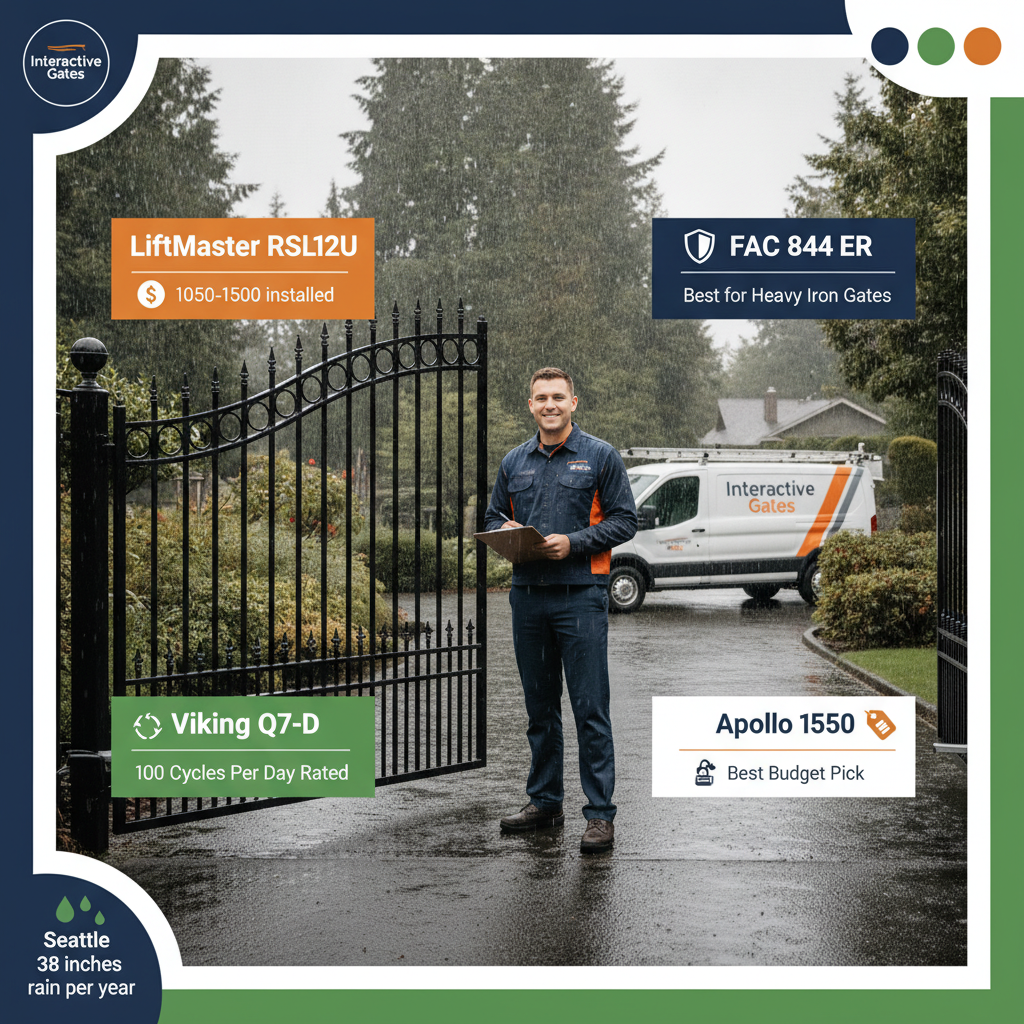
- LiftMaster RSL12U dominates Seattle installs in 2026, handling 150+ cycles/day with a sealed motor built for sustained rain exposure.
- FAAC 844 and 740 series openers are the premium pick for heavier wrought-iron and steel gates — rated to 1,320 lb swing panels and priced from $1,800–$3,200 installed.
- Viking Access gate operators offer the best mid-range value for sliding gates in Seattle, running $1,200–$2,400 installed with 10-year motor warranties on select models.
- Apollo 1550 ETL remains a popular budget swing-gate pick at $900–$1,600 installed, though its circuit boards need extra moisture protection in the Pacific Northwest climate.
- Salt air near Puget Sound, sustained 40+ mph winds, and 38+ inches of annual rainfall are the three climate factors that separate which brands hold up and which fail early in greater Seattle.
- Cycle count matters more than brand marketing — residential gates average 10–30 cycles/day; commercial and HOA gates can hit 100–300 cycles/day, requiring duty-rated operators.
- Expect labor to run $350–$650 on top of hardware for a standard residential opener swap in Seattle neighborhoods like Bellevue, Kirkland, or Gig Harbor.
- Smart-home integration (myQ, Z-Wave, app control) is now standard on LiftMaster and an add-on option on FAAC and Viking — budget $150–$400 extra for a full smart module.
Which Automatic Gate Opener Brand Is Best for Seattle in 2026?
You have an electric gate project coming up — maybe a new installation in Bellevue, a motor swap in Gig Harbor, or an HOA upgrade in Lynnwood — and you are staring at a shortlist of brand names that all sound equally authoritative. LiftMaster. FAAC. Viking. Apollo. Linear. Which one actually holds up against the Pacific Northwest's relentless rain, the occasional wind event rolling off Puget Sound, and the freeze-thaw cycles that show up every January? This guide breaks it down by brand, by gate type, by budget, and by Seattle's specific climate and terrain so you can make a confident decision in 2026.
Why Does Seattle's Climate Make Brand Selection So Important?
Not every gate opener sold in California or Texas will perform identically in greater Seattle. The Seattle metro averages 38 inches of rainfall per year, with the heaviest accumulation running October through March — that is a full six-month gauntlet of sustained moisture. Add salt-laden air from Puget Sound affecting waterfront homes in Gig Harbor, Tacoma, and along Lake Washington, plus sustained wind gusts that regularly reach 40–55 mph during fall storms, and you have a threat environment that separates adequately sealed operators from ones that corrode, water-intrude, or lose calibration within two to three years.
The specific failure modes Seattle installers see repeatedly include: control board corrosion from condensation cycling inside poorly sealed enclosures, limit-switch drift caused by thermal expansion and contraction during cold snaps, and motor brush wear accelerated by sustained damp operation. The brands that engineer for these conditions — with IP-rated enclosures, conformal-coated circuit boards, and self-learning limit switches — are the ones worth specifying in this market.
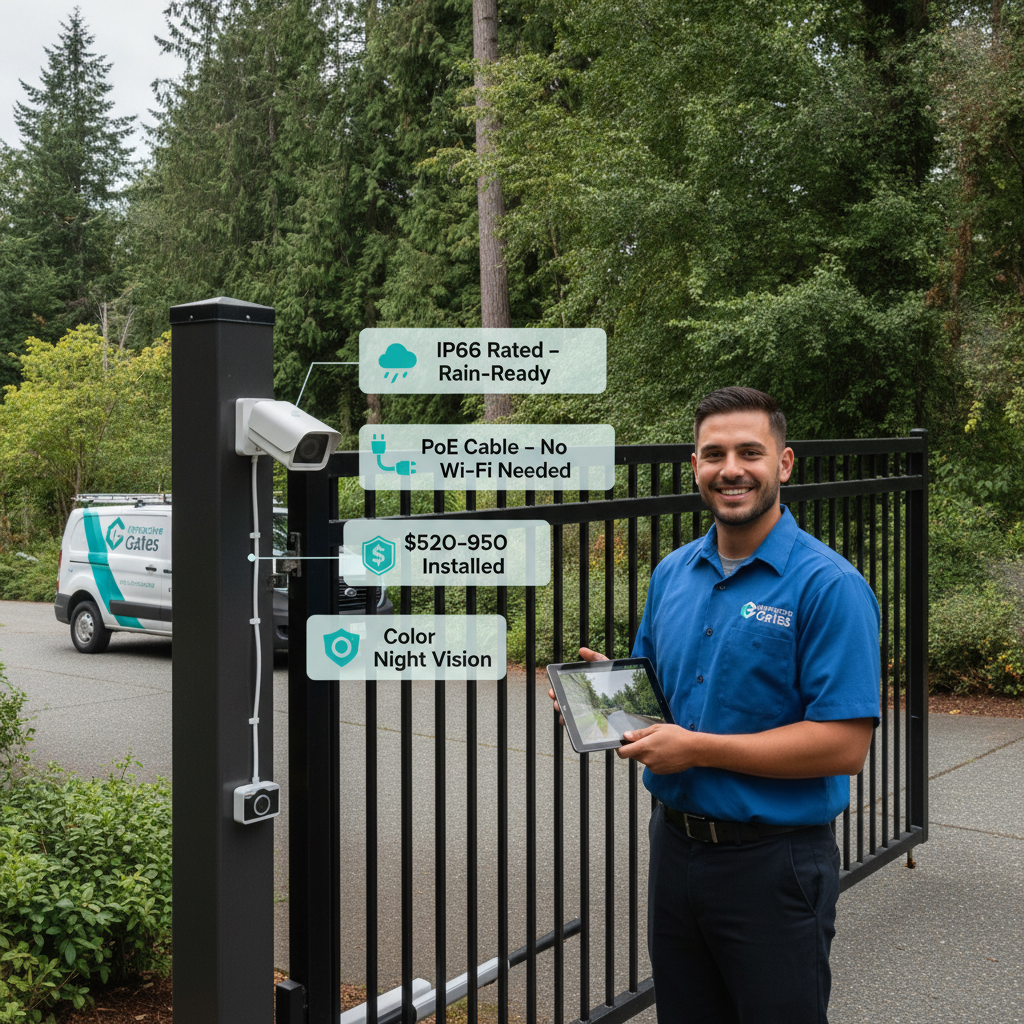
Pro Tip: Always ask your installer for the IP (Ingress Protection) rating of the operator enclosure. For Seattle's climate, you want a minimum of IP44 on a residential swing operator and IP54 or better on a sliding gate operator exposed to direct weather. FAAC and Viking both publish these ratings clearly; Apollo and lower-tier LiftMaster residential models are sometimes only IP34, requiring an aftermarket weather cover.
How Does LiftMaster Perform on Seattle Gates in 2026?
LiftMaster remains the highest-volume brand installed across the Seattle metro in 2026, and for straightforward residential swing and slide applications it earns that position. The RSL12U swing operator (suggested retail around $680–$820, installed cost $1,050–$1,500) is built on a 24V DC motor with soft-start and soft-stop, reducing mechanical shock on aluminum and lighter steel panels. Its enclosure is treated for moisture resistance, though homes within a mile of saltwater — think Gig Harbor waterfront or Tacoma's Commencement Bay neighborhoods — should add the optional IP54 weather shroud ($45–$75) to extend board life.
The LiftMaster LA500 solar-compatible swing operator is gaining ground in 2026 for Snohomish County acreage homes where trenching power to a remote gate is cost-prohibitive. It runs off a 12V battery kept charged by a small solar panel and handles gates up to 500 lb per leaf. Installed cost runs $1,200–$1,900 depending on solar panel size. The LiftMaster CSW200 is the workhorse slide operator for Seattle driveways under 40 feet, rated for 200 cycles/day — well above residential demand — and priced at $1,100–$1,650 installed.
LiftMaster's myQ ecosystem is a genuine advantage: remote open/close via smartphone, real-time alerts, and compatibility with Ring, Google Home, and Amazon Alexa are all native features with no proprietary add-on module needed. For homeowners in Bellevue tech corridors or Kirkland neighborhoods who want app-first access control, this integration is a deciding factor. See how LiftMaster compares against other access control setups on our Bellevue gate services page.
Is FAAC Worth the Premium Price for Seattle Homes?
FAAC is an Italian-engineered brand that has built its North American reputation in commercial and high-end residential applications, and in Seattle that reputation is well-earned. The FAAC 844 ER swing operator handles single gate leaves up to 1,100 lb and dual-leaf configurations up to 2,200 lb combined — which makes it the right specification for heavy ornamental iron gates common in Medina, Mercer Island, and older Tacoma estates. Installed cost runs $2,200–$3,500 for a dual-leaf residential application.
What sets FAAC apart in Seattle's climate is the electro-hydraulic motor design: the motor is submerged in hydraulic fluid inside a sealed body, making it inherently resistant to water intrusion, condensation, and dust in a way that dry-motor competitors simply cannot match. This design also gives FAAC operators a natural thermal stability — hydraulic fluid buffers against the rapid temperature swings Seattle sees between a cold January night at 28°F and an afternoon at 48°F. Circuit boards on the FAAC E024S controller are conformal-coated as a factory standard, not an upcharge.
The tradeoff is cost and repair complexity. FAAC parts are more expensive ($180–$380 for a replacement control board vs. $95–$160 for LiftMaster equivalents), and not every Seattle gate technician stocks FAAC components. If you are specifying FAAC, confirm that your installer carries the brand regularly. For high-use properties — HOA gates in Lynnwood or Auburn seeing 150+ cycles/day — the total cost of ownership over 15 years often justifies the FAAC premium through lower failure rates and longer service intervals.
Where Does Viking Gate Access Systems Fit in the Seattle Market?
Viking Access makes operators specifically for the North American commercial and mid-to-high residential market, and their Viking Q7-D slide operator is one of the most reliable choices for Seattle sliding gates in the $1,200–$2,400 installed range. Viking's duty ratings are published in honest cycles-per-day figures rather than obscure marketing language: the Q7-D is rated for 100 cycles/day continuous duty, making it the right call for busy residential driveways in Auburn or Everett where multiple vehicles come and go through the day.
Viking's control boards feature onboard diagnostics with LED fault codes — a practical advantage when a Seattle technician responds to a service call in December and needs to diagnose a problem without specialized software. The Viking ES-200 swing operator handles gates up to 850 lb per leaf and is priced at $1,400–$2,100 installed for a dual-leaf residential setup. Viking also offers a 10-year motor warranty on select commercial-grade models, which is the longest in the category and meaningful for HOA purchasers doing a 10-year budget projection.
Viking's weakness relative to LiftMaster is native smart-home integration — the brand's app control requires a third-party Z-Wave or Wi-Fi module ($120–$220 add-on) rather than a built-in solution. For properties where app control is secondary to mechanical durability — a farm gate in Snohomish, an industrial yard in Tacoma — this matters little. For tech-forward homeowners in Bellevue or Kirkland, it is a minor friction point. Browse our Snohomish gate installation page and our Tacoma gate services page for local project examples.
Is Apollo Still a Good Choice for Seattle Swing Gates in 2026?
Apollo gate openers occupy the value tier of the market, and the Apollo 1550 ETL remains the most commonly specified budget swing operator in Seattle residential installs. At $900–$1,600 installed for a dual-leaf setup, it undercuts FAAC and Viking significantly. Apollo's motors are reliable for light-to-moderate duty (10–40 cycles/day), making them appropriate for single-family homes in Lynnwood or Auburn where the gate opens a handful of times per day.
The Seattle-specific caution with Apollo is circuit board vulnerability. Apollo's standard control boards use a conformal coating that is thinner than FAAC's factory standard, and in sustained high-humidity environments — which describe most of western Washington from October to April — moisture intrusion through the board connector pins is the most common failure mode reported by local technicians. The fix is straightforward: add an aftermarket weatherproof enclosure wrap ($35–$80) at installation, and program the board's auto-close timer to prevent the gate from sitting in the open-and-damp position for extended periods. With those precautions, an Apollo 1550 on a typical Seattle residential driveway can deliver 7–10 years of reliable service.
Apollo is not the right call for gates heavier than 850 lb per leaf, gates on waterfront properties, or HOA applications with 80+ daily cycles. In those scenarios, moving up to Viking or FAAC is the right economic decision even if the upfront cost is higher.
Pro Tip: If your budget limits you to the Apollo tier but your property is within a mile of Puget Sound, ask your installer to apply a corrosion-inhibiting dielectric grease to all board connectors and terminal strips at installation. This $20 step can double the board's service life in salt-air environments.
How Do These Brands Compare on Cost for Seattle Installs in 2026?
Here is a direct cost comparison for a standard residential dual-leaf swing gate installation in the Seattle metro in 2026 — hardware plus labor, excluding gate fabrication:
- Apollo 1550 ETL (dual swing, up to 850 lb/leaf): $900–$1,600 installed
- LiftMaster RSL12U (dual swing, up to 500 lb/leaf): $1,050–$1,500 installed
- LiftMaster LA500 (solar swing, single leaf): $1,200–$1,900 installed
- Viking ES-200 (dual swing, up to 850 lb/leaf): $1,400–$2,100 installed
- LiftMaster CSW200 (sliding, up to 1,200 lb): $1,100–$1,650 installed
- Viking Q7-D (sliding, 100 cycles/day): $1,200–$2,400 installed
- FAAC 844 ER (dual swing, up to 1,100 lb/leaf): $2,200–$3,500 installed
- FAAC 740 (sliding, commercial duty): $2,800–$4,200 installed
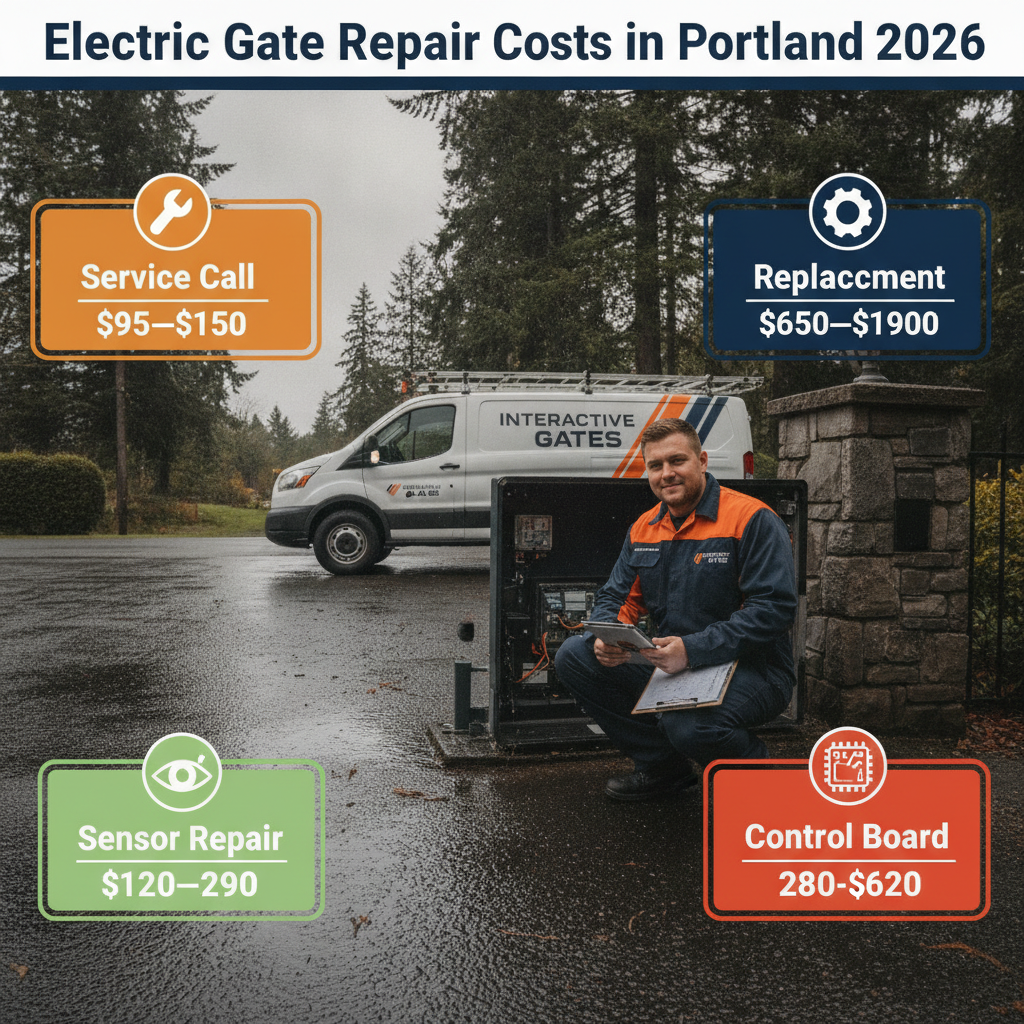
Labor in Seattle ranges from $350–$650 for a straightforward operator swap on an existing gate structure. New post-and-foundation work, electrical trenching, or access control integration adds $400–$2,000 depending on scope. For a visual breakdown of complete installation costs, visit our Seattle gate installation page or use the Interactive Gates design and pricing tool to build a customized estimate.
Which Brand Should Seattle HOAs Specify in 2026?
HOA and multi-family applications change the calculus significantly. A community gate in Lynnwood or Auburn seeing 150–300 cycles per day needs a commercial-duty operator, full stop. In this category, FAAC 740 (sliding) and FAAC 391 (swing) are the most specified brands for gated communities in the Seattle metro because of their hydraulic sealing, 300+ cycle/day ratings, and documented 15–20 year service life under proper maintenance schedules. Viking's commercial swing and slide operators are a close second and often 15–20% less expensive than FAAC at the hardware level.
LiftMaster's commercial CSL24U and CSW200 models are appropriate for HOA applications with 100–200 cycles/day but are generally considered the floor of commercial duty rather than the ceiling. Apollo has no model rated for genuine HOA cycle counts and should not be specified for community gate applications. For HOA-specific guidance on operator selection, maintenance contracts, and code compliance, see our commercial and HOA gate services page.
In One Minute: Choosing a Gate Opener Brand for Seattle in 2026
LiftMaster is the best all-around choice for most Seattle residential properties — good moisture resistance, strong smart-home integration, and wide parts availability. FAAC is the premium pick for heavy iron gates, waterfront homes, and HOA applications where long service life justifies a higher upfront spend. Viking is the best mid-range brand for sliding gates and properties needing honest duty ratings without paying FAAC prices. Apollo is a viable budget pick for light-duty residential swings if weatherproofing precautions are taken at install. For every brand, climate-proofing — weather shrouds, dielectric grease, conformal-coated boards — is as important as brand selection itself in the Pacific Northwest.
Frequently Asked Questions: Automatic Gate Opener Brands in Seattle 2026
What is the most reliable gate opener brand for Seattle's rainy climate?
FAAC is the most climate-resistant brand available in Seattle in 2026 due to its electro-hydraulic motor design and factory-standard conformal-coated control boards, both of which resist moisture intrusion better than competitive designs. For standard residential budgets, LiftMaster with an added IP54 weather shroud is the most reliable mainstream option, particularly the RSL12U and LA500 models.
How much does it cost to replace a gate opener in Seattle in 2026?
Replacing a gate opener on an existing gate structure in Seattle costs $900–$3,500 for hardware plus $350–$650 in labor, depending on brand, gate type, and any access control upgrades included. A mid-range residential LiftMaster or Viking swap typically lands in the $1,200–$2,100 range all-in. FAAC replacements for heavy iron gates start around $2,500 installed.
Is LiftMaster or Viking better for a sliding gate in Seattle?
Both are solid choices. LiftMaster's CSW200 is slightly less expensive ($1,100–$1,650 installed) and offers native myQ app control, making it ideal for tech-forward homeowners. Viking's Q7-D provides a higher published cycle-count rating (100 cycles/day continuous) and a longer motor warranty on select models, making it the better specification for busier properties. For HOA or commercial sliding gates, FAAC 740 leads both.
Can I use a solar gate opener in the Seattle area?
Yes — the LiftMaster LA500 and certain Viking solar-compatible models work reliably in Seattle when sized correctly. Because Seattle averages only 152 sunny days per year, solar operators should be paired with a minimum 20W panel and a battery bank that provides at least 72 hours of backup capacity without solar input. Properties in eastern Snohomish County or on south-facing slopes get better solar performance than shaded lots in dense neighborhoods.
How long should a gate opener last on a Seattle residential property?
With annual maintenance, a properly installed LiftMaster residential operator lasts 10–14 years, a Viking 10–15 years, and a FAAC 15–20 years. Apollo operators on light-duty residential applications typically reach 7–10 years before control board or motor replacement becomes necessary. Skipping annual lubrication and limit-switch calibration can cut these lifespans by 30–40% in Seattle's damp climate.
Do gate opener brands affect my permit approval in Seattle or Bellevue?
Brand alone does not affect permit approval, but UL 325 listing is required on all automatic gate operators installed in Washington State. All major brands covered in this article — LiftMaster, FAAC, Viking, and Apollo — are UL 325 listed. What can affect permit approval is the entrapment protection system (safety edges, photo eyes, monitored edges) paired with the operator, so confirm your installer is specifying UL 325-compliant safety devices alongside the opener itself.
Ready to Choose the Right Opener for Your Seattle Gate?
The best brand for your property depends on your gate weight, daily cycle count, proximity to salt air, and budget — not on what sold the most units nationally. If you are still weighing options or want a site-specific recommendation, our team installs and services all four brands across the Seattle metro from Gig Harbor to Everett. Browse completed projects in the Interactive Gates portfolio, read what local customers say on our reviews page, or reach out for a no-pressure consultation — we will tell you exactly which operator makes sense for your specific gate, driveway, and neighborhood.
FAQs