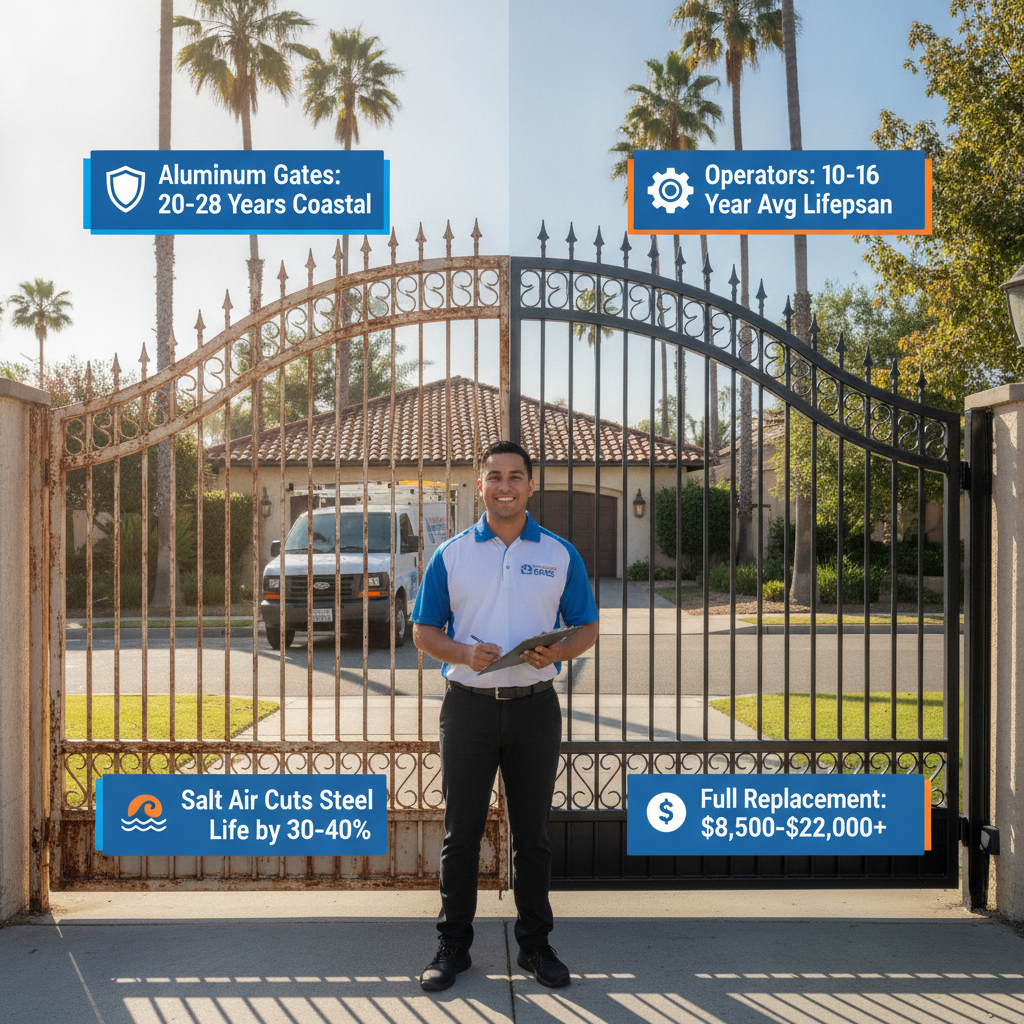
- Steel swing gates last 20–30 years in Seattle with proper galvanizing and annual maintenance.
- Aluminum slide gates average 15–25 years but resist rust better than bare steel in Seattle's wet climate.
- Wood-framed automatic gates need replacement every 8–15 years due to rot, warp, and hinge stress from moisture.
- Gate operators typically last 10–15 years — LiftMaster and FAAC units are rated 500,000–1,000,000 cycles depending on model.
- Seattle's 38+ inches of annual rainfall accelerates corrosion on untreated hardware by 30–40% versus drier climates.
- A mid-range gate replacement runs $4,500–$12,000 installed in the Seattle metro in 2026, depending on material and style.
- Most gates show 3–5 warning signs 6–18 months before failure — catching them early saves $800–$2,500 in emergency repair costs.
- Saltair exposure in areas like Gig Harbor adds UV and salt stress, trimming 3–5 years off an otherwise well-maintained gate.
How Long Does an Electric Gate Actually Last in Seattle?
You're probably here because your gate is grinding, sagging, or just acting strange — and you want a straight answer: do you fix it or replace it? Or maybe you're shopping for a new gate and you want to know what you're really buying. Either way, the lifespan of an electric gate in Seattle is not a single number. It depends on the material, the operator brand, how well it's maintained, and — critically — where in the greater Seattle area you live. A powder-coated steel swing gate in a sheltered Bellevue driveway behaves very differently than a bare-iron slide gate on a waterfront lot in Gig Harbor. This guide breaks it all down with real 2026 numbers.
What Is the Lifespan of a Steel Electric Gate in Seattle?
Steel is the most popular gate material in the Seattle metro, and for good reason — it's strong, weldable into almost any ornamental design, and relatively affordable. A properly galvanized and powder-coated steel swing or slide gate installed by a professional will realistically last 20–30 years in Seattle before structural replacement is needed. That said, 'lasting' and 'looking good' are two different things. Surface rust typically appears on cut edges and weld points within 7–12 years if touchup painting is skipped. Deep rust that compromises structural integrity usually takes 15–20 years of total neglect to develop. The gate frame and pickets may outlive the hinges, rollers, and operator by a decade — which is why it's important to think of the gate system in layers rather than as a single unit. Steel gates in neighborhoods with heavy tree canopy, like Snohomish or parts of Auburn, face extra challenges: leaf debris holds moisture against the base rail, and that's where the first serious corrosion tends to appear.
Pro Tip: When a fabricator quotes you a steel gate, ask specifically whether it's hot-dip galvanized or just powder-coated. Hot-dip galvanizing adds $300–$700 to the price of a residential gate but can add 10–15 years of rust-free service life in Seattle's climate — easily the best dollar-for-dollar investment on a steel gate.
How Long Does an Aluminum Gate Last in Seattle's Wet Climate?
Aluminum gates don't rust — that's their headline advantage. In Seattle's rain-heavy environment, that matters. A well-built aluminum swing or slide gate will typically last 15–25 years before the frame or pickets need replacement. The tradeoff is that aluminum is softer than steel, so it dents more easily and can flex under impact. Hinges and post connections are the weak spots: aluminum is prone to stress cracking at weld points over time, especially on heavier gates. For residential gates up to 16 feet wide and 400 pounds, aluminum performs very well. For heavier commercial-style slide gates exceeding 600 pounds, steel remains the more durable long-term choice. Aluminum is especially popular in Lynnwood and Bellevue HOA communities where HOA boards want a clean, low-maintenance look with minimal annual service calls. You can see examples of aluminum gate styles in our project portfolio.
What About Wood Gates With Electric Openers?
Wood-framed electric gates are the shortest-lived option in Seattle — full stop. Even cedar and redwood, Seattle's two most rot-resistant native choices, will warp, crack, and degrade under constant moisture cycling. Expect 8–12 years for a cedar gate with regular sealing and hardware maintenance, and as few as 5–8 years without it. The mechanical stress placed on hinges and operators by a warping wood gate also kills openers faster — a motor that might last 12 years on a steel gate may fail in 6–8 years on a swelling wood gate. If you love the look of wood, a steel-framed gate with wood infill panels is a smarter long-term investment: the steel carries the structural load, and the wood panels can be replaced individually without touching the operator or hinges.
How Long Does an Electric Gate Operator Last in Seattle?
The operator (motor) is the most mechanically complex and most frequently serviced component of any automatic gate system. In Seattle, the key lifespan factors are cycle count, moisture ingress, power quality, and brand. Here's how the major brands compare in 2026:
- LiftMaster (including Chamberlain/Hysecurity): Residential swing operators like the LA400 and LA500 are rated for 500,000–800,000 cycles and average 10–15 years in Seattle conditions. The Hysecurity commercial line (HydraSwing, SlideDriver) regularly reaches 15–20 years with annual service.
- FAAC: Italian-engineered hydraulic operators like the FAAC 760 and 844 are particularly well-suited to Seattle's wet climate because hydraulic systems are sealed and less vulnerable to moisture than electromechanical alternatives. Expect 12–18 years on a well-maintained residential unit.
- Viking Access: The Viking Q series operators are popular in Tacoma and Lakewood commercial properties. They're rated for 1,000,000 cycles on the commercial lineup and typically last 12–16 years residentially.
- Apollo (Nice): Budget-to-mid-range residential operators. The Apollo 1500 and 1600 series are reliable for light-duty use (under 50 cycles/day) with a realistic lifespan of 8–12 years in Seattle conditions.
For a deeper comparison of operator brands, see our guide to electric gate services in Seattle or explore gate installation options in Bellevue.
How Does Seattle's Climate Specifically Shorten Gate Life?
Seattle averages 38+ inches of rain per year and sits in an overcast, high-humidity maritime climate for roughly 8 months of the year. Here's exactly how that translates to gate wear:
- Corrosion acceleration: Untreated or scratched steel in Seattle can develop surface rust within 18–24 months. In drier climates like Denver, the same scratch might take 4–6 years to show rust.
- Freeze-thaw cycling: Seattle's winters rarely drop below 28°F for extended periods, but freeze-thaw events — especially in elevated neighborhoods near Everett or in the foothills — expand and contract metal components, loosening fasteners and stressing welds over time.
- Biological growth: Moss, algae, and mildew accumulate on gate frames and tracks in shaded driveways. This holds moisture against metal surfaces and accelerates corrosion even on powder-coated gates.
- Salt exposure near water: Properties near Puget Sound, in Gig Harbor, or on Lake Washington waterfront face additional salt aerosol stress. Salt + moisture is the most corrosive combination for steel gates. Residents in these areas should expect lifespans 3–5 years shorter than inland Seattle properties, and should prioritize stainless steel hardware, marine-grade coatings, and annual inspections.
Pro Tip: If your gate is in a moss-prone driveway (common in Snohomish County and parts of Auburn), a zinc-based spray applied to the bottom rail and track channel every spring does more to extend gate life than almost any other single maintenance step. A $12 can of cold galvanizing compound beats a $600 rust repair every time.
What Are the Warning Signs That a Seattle Gate Needs Replacement?
Most gates give you 6–18 months of warning before they reach end-of-life. Here are the signs to watch for:
- Sagging or binding: A gate that scrapes the ground or hesitates mid-travel has shifted — usually due to post movement, hinge wear, or a warped frame. Once a gate is more than 1–2 inches out of plumb, repair costs escalate quickly.
- Intermittent motor failure: If the gate works sometimes and not others, the operator is likely failing. A service call to diagnose and repair averages $180–$380 in the Seattle metro in 2026. If the same fault recurs within 12 months, replacement is usually more economical.
- Visible deep rust: Surface rust (orange staining, flaking paint) is repairable. Deep rust that has eaten through the tube wall or picket base is not — that gate section needs replacement.
- Erratic or slow movement: Slow operation is often the first symptom of a failing capacitor, worn gearbox, or low hydraulic fluid. Left unaddressed, it progresses to full failure.
- Damaged safety sensors: Non-functional photo eyes or loop detectors aren't just a nuisance — they're a liability. If your gate fails to reverse on an obstruction, it poses a serious safety risk and may violate UL 325 standards.
If you're seeing two or more of the above on the same gate, it's worth getting a professional assessment. Our residential gate page outlines what a full system evaluation covers.
How Much Does Gate Replacement Cost in Seattle in 2026?
Here are realistic installed replacement costs for the Seattle metro in 2026, including operator, hardware, and labor:
- Single aluminum swing gate (10–14 ft), mid-range operator: $3,800–$6,500
- Dual steel swing gate (16–20 ft total), LiftMaster or FAAC operator: $6,500–$11,000
- Steel slide gate (20–30 ft), Viking or LiftMaster commercial operator: $8,500–$16,000
- Wood-framed gate with steel skeleton, mid-range operator: $5,000–$9,000
- Operator-only replacement (same gate, new motor): $1,200–$2,800 installed depending on brand and gate weight
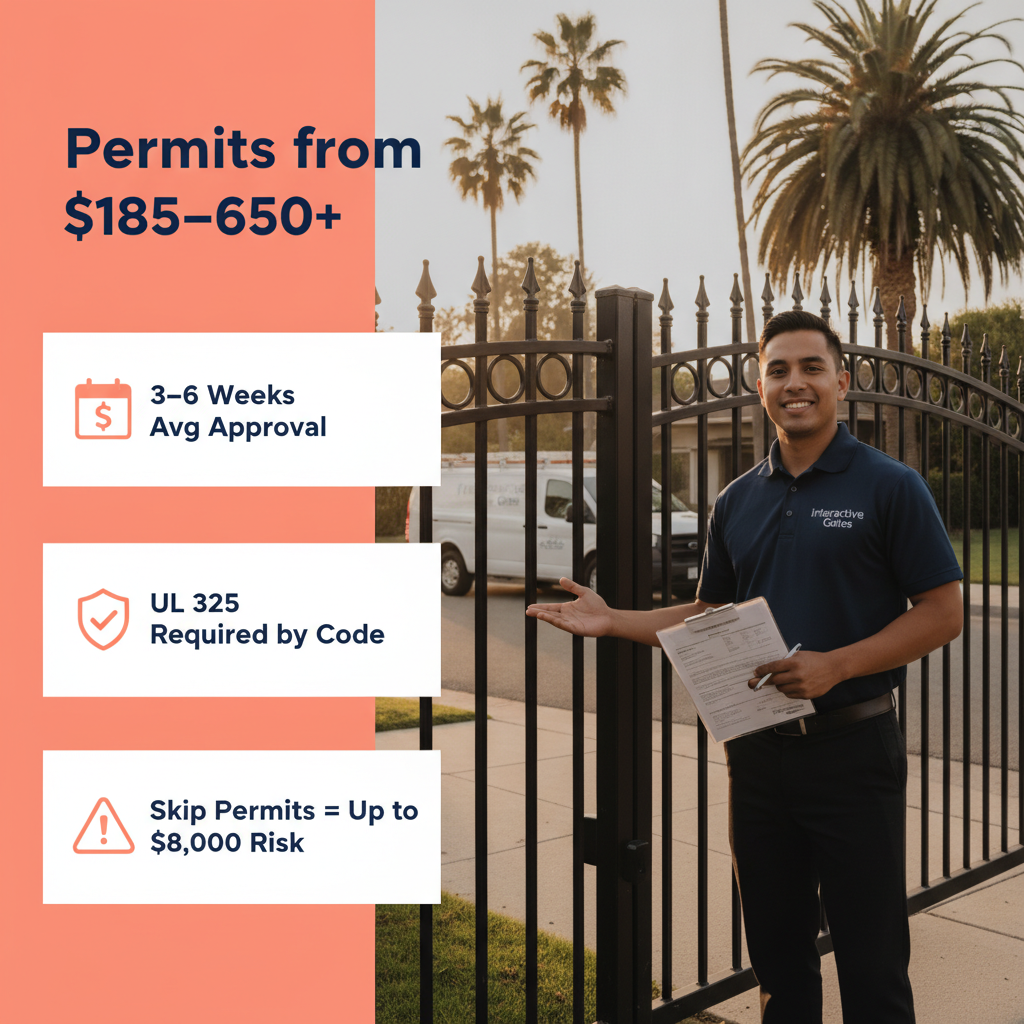
Permit costs in Seattle, Bellevue, and Tacoma add $150–$450 for residential gate projects, depending on the jurisdiction and whether the project requires a site plan review. Commercial HOA projects in communities like those in Gig Harbor or Lynnwood may require additional review fees. For a tailored estimate or to visualize your replacement gate style, try our gate designer tool.
In One Minute: Seattle Electric Gate Lifespan Recap
Steel gates last 20–30 years with proper coating. Aluminum gates last 15–25 years and resist rust better. Wood gates last 8–15 years max in Seattle's wet climate. Operators from LiftMaster, FAAC, and Viking last 10–18 years depending on model and duty cycle. Seattle's 38+ inches of annual rain, freeze-thaw events, and coastal salt exposure near Puget Sound all accelerate wear. Watch for sagging, intermittent motor faults, deep rust, and sensor failures as end-of-life signals. Replacement installed costs run $3,800–$16,000 in 2026 depending on gate type and operator brand. Catching problems early saves $800–$2,500 in emergency repairs.
Frequently Asked Questions About Electric Gate Lifespan in Seattle
How many years should I expect from a new electric gate in Seattle?
A new steel or aluminum electric gate professionally installed in Seattle should last 15–30 years structurally. The operator (motor) will typically need replacement or major service between year 10 and year 15. Regular annual maintenance — lubrication, alignment checks, hardware tightening — is the single biggest factor in reaching the top end of that range.
Does Seattle rain really damage electric gates that much?
Yes, meaningfully so. Seattle's persistent moisture accelerates surface rust on untreated steel by roughly 30–40% compared to drier climates. The biggest risks are to cut edges, weld points, base rails sitting in debris, and any hardware that's been scratched. Sealed hydraulic operators like FAAC models handle the climate better than open electromechanical designs. Annual inspection and touchup coating are essential.
When is it worth repairing vs. replacing an electric gate in Seattle?
The general rule: if repair costs exceed 50% of replacement cost, or if you've repaired the same component more than twice in three years, replacement is the better investment. An operator repair averaging $400–$700 makes sense on a 5-year-old gate but not on a 14-year-old gate with corroded hardware and a sagging frame. A professional assessment will give you a repair-vs-replace recommendation based on the full system condition.
What's the longest-lasting gate material for Seattle's climate?
Hot-dip galvanized steel with a powder-coat finish is the most durable choice for Seattle, lasting 20–30 years with moderate maintenance. Aluminum is a close second at 15–25 years with virtually no rust risk, making it the better low-maintenance choice. Stainless steel hardware (hinges, rollers, fasteners) extends the life of any gate material significantly, especially on waterfront properties near Puget Sound or Lake Washington.
Can I replace just the motor without replacing the whole gate?
Yes — and this is often the right call if the gate frame is still structurally sound. Operator-only replacement in Seattle runs $1,200–$2,800 installed in 2026, depending on the brand and gate weight class. A technician will verify that the existing gate is still plumb and that the mounting posts are solid before recommending an operator swap. If the gate has shifted more than 1–2 inches out of alignment, post repair or full replacement may be necessary first.
Are there Seattle-area permits required to replace an electric gate?
In most cases, replacing a like-for-like gate on an existing residential property does not require a permit. However, changing the gate style, size, or adding a new operator where none existed before may trigger a permit requirement in cities like Seattle, Bellevue, and Tacoma. Permit fees run $150–$450 for residential projects. Your installation contractor should be able to advise on the specific requirements for your jurisdiction.
Ready to Find Out Where Your Gate Stands?
Whether you're troubleshooting a gate that's acting up or planning a full replacement, a professional eyes-on inspection gives you the clearest picture. Our team works across the Seattle metro — from Tacoma to Everett — and can tell you honestly whether a repair makes sense or whether you're better off investing in a new system. Reach out here to schedule an assessment, or explore your replacement options on our residential gate page. No pressure, no upsell — just a straight answer about what your gate actually needs.