- Annual professional service runs $180–$350 for a single-gate system in greater Los Angeles in 2026.
- Lubricate hinges, rollers, and chains every 3–4 months — salt air near the coast accelerates corrosion faster than inland areas.
- Safety-sensor alignment should be tested every 60 days; misalignment is the number-one cause of gate reversals in SoCal heat.
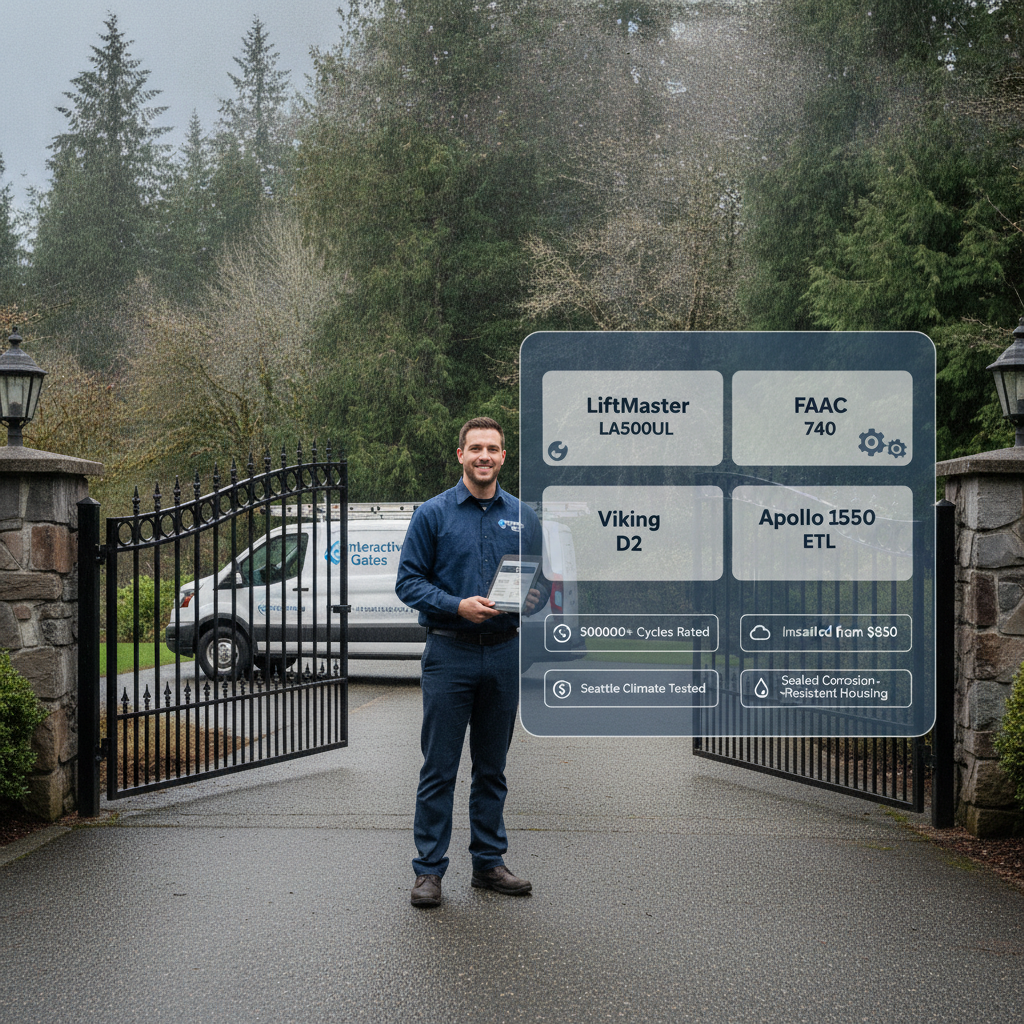
- Gate opener circuit boards last 8–12 years on brands like LiftMaster, FAAC, and Viking when maintained; neglect cuts that to 4–6 years.
- A full tune-up — lube, sensor test, limit adjustment, battery swap — takes about 90 minutes and prevents 80 % of emergency repair calls.
- Swing-gate arm pivots need grease every 90 days in coastal ZIP codes like Laguna Beach and San Clemente where marine air is relentless.
- Emergency after-hours repair calls in LA average $275–$450, making a $220 annual service plan a smart investment.
- HOA-managed gates should be on a quarterly inspection schedule to stay compliant with UL 325 safety standards required by California.
Is Your Automatic Gate in Los Angeles Actually Getting the Maintenance It Needs?
Homeowners across the Los Angeles metro ask the same questions every year: 'How often should I service my electric gate?' 'What does a gate tune-up actually include?' 'Is annual maintenance worth it, or do I just call someone when it breaks?' If you're in Rolling Hills, Laguna Beach, Orange, or the San Fernando Valley, those are exactly the right questions — because Southern California's climate does things to gate hardware that most people never anticipate. UV exposure, coastal salt air, Santa Ana winds, and hard-water mineral deposits combine into a maintenance environment unlike anywhere else in the country. This guide breaks down exactly what needs servicing, how often, what it costs in 2026, and what happens if you skip it.
Why Does Southern California's Climate Make Gate Maintenance More Critical Than Most Places?
People assume Los Angeles's mild weather means gates need less attention. The opposite is true. Here's what's actually working against your gate every single day.
First, UV radiation. LA gets roughly 285 sunny days per year. Prolonged UV exposure degrades rubber seals, cracks plastic sensor housings, bleaches powder-coat finishes, and hardens lubricants until they become ineffective. Gate installers in Orange and Laguna Beach report that UV-related seal failure is the most common culprit behind slow gate cycles they see on five-to-seven-year-old systems.
Second, coastal salt air. Properties within about five miles of the Pacific — San Clemente, Laguna Beach, Los Angeles coastal neighborhoods — are bathed in sodium chloride particles year-round. Salt migrates into every joint, bearing, and electrical connection. Without quarterly lubrication and annual electrical inspection, corrosion can destroy a hinge in two to three seasons instead of eight to ten years inland.
Third, Santa Ana wind events. Gusts regularly hit 50–70 mph in canyons and hillside neighborhoods like Rolling Hills. Every high-wind event stress-tests your gate's mechanical stops, hinges, and arm attachments. After any Santa Ana event, a quick visual inspection for bent hardware is non-negotiable.
Fourth, hard water and sprinkler overspray. LA's water hardness averages 200–300 ppm, and many automated irrigation systems mist gate tracks, rollers, and operators. Mineral scale builds up on sliding-gate tracks within a single season, increasing motor load and shortening drive belt life dramatically.
What Does a Professional Gate Maintenance Visit Actually Include?
A thorough annual service call from a qualified technician covers far more than squirting oil on the hinges. Here's the complete checklist a reputable contractor — like the team at Interactive Gates Los Angeles — should run through on every visit.
- Lubrication: Hinges, rollers, roller tracks, chain or belt drives, and arm pivot points are cleaned of old grease and re-lubricated with a product appropriate for the temperature range — typically a lithium-based or NLGI Grade 2 grease for SoCal conditions.
- Safety-sensor test: Photoelectric beam sensors are aligned, cleaned, and function-tested per UL 325 requirements. The technician physically breaks the beam mid-cycle to confirm proper reversal.
- Limit switch and force adjustment: Open and close limits are verified so the gate stops at exactly the right position. Force settings are calibrated so the gate reverses at the correct resistance — critical for pedestrian safety.
- Battery backup inspection: Sealed lead-acid or lithium backup batteries are load-tested. Most need replacement every 2–3 years; coastal heat accelerates degradation.
- Control board and wiring inspection: The technician checks for corrosion on terminal blocks, loose connections, and signs of rodent damage — a real issue in scrubby hillside neighborhoods like Rolling Hills.
- Hardware inspection: Hinges, posts, latch bolts, and anti-lift devices are checked for wear, rust, and misalignment. Bent or worn parts are noted for replacement.
- Cycle count verification: Commercial-grade operators like the FAAC 844 ER or LiftMaster LA500 track cycle counts. The technician checks whether the unit is approaching its rated maintenance interval (typically every 50,000–100,000 cycles on heavy-duty models).
- Intercom and access device test: Keypad codes, remote frequencies, and any video intercom connections are tested and verified.
Pro Tip: Always ask your technician to document the safety-sensor reversal test in writing. California's UL 325 requirements place liability on property owners if a gate injures someone and there's no service record showing the sensor was verified functional.
How Often Should You Service an Electric Gate in Los Angeles?
The right frequency depends on where your property sits and how heavily the gate is used. Here's the breakdown by location and use type.
Coastal properties (San Clemente, Laguna Beach, Los Angeles coastal): Quarterly lubrication of all moving metal parts is strongly recommended. Annual full professional service is a minimum. Properties within two miles of the ocean should consider a semi-annual professional visit — the difference in corrosion rate is measurable.
Inland and valley properties (Orange, Rolling Hills, Los Angeles inland neighborhoods): A thorough DIY lubrication every 3–4 months plus one annual professional service call covers most residential gates. If your gate cycles more than 15–20 times per day (a busy family home or small business), consider a semi-annual professional visit.
HOA-managed gates: UL 325 and most HOA insurance carriers effectively require quarterly inspection logs. Commercial and HOA gate service plans from Interactive Gates are structured for exactly this frequency, with documented inspection reports included.
High-cycle commercial gates: Any gate operating 50+ cycles per day needs monthly operator inspection and lubrication, with a full professional service every 6 months. Gate operators are rated by cycle count, not just years, and a commercial entrance burning through 1,500 cycles per month will hit a 100,000-cycle maintenance interval in under six years.
What Does Gate Maintenance Cost in Los Angeles in 2026?
Here's what you'll realistically pay in the LA metro this year.
- Single-gate residential annual tune-up: $180–$350 depending on gate type (swing vs. slide), operator brand, and whether parts like a battery or sensor are replaced during the visit.
- Dual-gate (bi-parting swing or dual slide) annual tune-up: $280–$500. Each operator needs independent adjustment and testing.
- Semi-annual service plan: $400–$700/year for residential. Plans typically include priority scheduling and discounted parts.
- HOA or commercial quarterly inspection plan: $600–$1,400/year depending on the number of gates, operator complexity, and access-control systems included.
- Add-on parts during service: Battery replacement $45–$95; sensor replacement $60–$130; gate lubricant kit $20–$40; limit switch $55–$120; operator drive belt $40–$90.
- Emergency after-hours repair call (gate stuck open/closed): $275–$450 service call plus parts. Preventive maintenance is significantly cheaper.
For reference, a LiftMaster LA400 or LA500 swing-gate operator — one of the most common residential units in the LA market — recommends a full service every 100,000 cycles or annually, whichever comes first. At 10 cycles per day, you hit that point in about 27 years. At 50 cycles per day (a busy household or small building), you're there in just over 5 years. The math strongly favors keeping up with annual or semi-annual service rather than waiting for failure.
What Happens If You Skip Gate Maintenance?
The consequences are rarely dramatic at first — that's the trap. A gate that hasn't been lubricated in two years still opens and closes. But it's working harder than it should: the motor draws more current, the drive belt or chain wears faster, limit switches drift, and the control board starts logging fault codes. Then one morning — often the morning you're running late — it stops.
Common failure modes from deferred maintenance in LA conditions include: seized roller bearings on sliding gates (cost to repair: $180–$320); stripped drive gears on swing-gate operators ($220–$450 for gear replacement, or full operator replacement at $600–$1,200 installed); corroded safety-sensor wiring causing random reversals ($90–$220 to diagnose and repair); and cracked or sun-hardened hinge bushings that cause gate sag and misalignment ($150–$350 to correct).
Pro Tip: Walk your gate through a full open-close cycle every two weeks and listen. A healthy gate is quiet and smooth. Grinding, clicking, or jerking motion means something needs attention now — before the next Santa Ana wind event stress-tests that weakened component to failure.
Can You Do Any Gate Maintenance Yourself?
Yes — several tasks are safe and straightforward for homeowners. Lubrication of hinges, roller tracks, and exposed chain or belt drives can be done with a lithium grease spray (Blaster White Lithium or similar) on a dry day every 3–4 months. Cleaning dirt and debris from sliding-gate tracks is a weekly or monthly task depending on landscaping. Testing the safety sensor by walking through the beam while the gate is closing takes thirty seconds and should be done monthly.
What you should not DIY: limit switch adjustment, electrical terminal inspection, circuit board diagnostics, force calibration, and any work inside the operator housing. These involve live 120V circuits or precise mechanical calibrations that affect UL 325 safety compliance. Leave those for a licensed technician.
To browse gate systems and understand what hardware you're maintaining, the Interactive Gates design visualizer lets you explore styles, materials, and configurations specific to Southern California properties. See completed local projects in the project portfolio and read what LA-area homeowners say about service quality in the customer reviews section.
In One Minute: Electric Gate Maintenance in Los Angeles 2026
Residential gate maintenance in LA costs $180–$350 per year for a single gate and $280–$500 for dual-gate systems. Coastal properties near San Clemente, Laguna Beach, or the LA coastline need quarterly lubrication due to salt air. Inland and valley properties can get by with DIY lube every 3–4 months plus one annual pro visit. A full professional service covers lubrication, sensor testing, limit and force calibration, battery load test, board and wiring inspection, and hardware check — about 90 minutes of work. HOA gates need quarterly documented inspections for UL 325 compliance and insurance purposes. Emergency repair calls average $275–$450 plus parts — far more than a service plan. UV exposure, salt air, Santa Ana winds, and hard water make LA conditions uniquely hard on gate hardware, so skipping maintenance is a false economy that shortens operator life from 12 years to 4–6.
Frequently Asked Questions: Electric Gate Maintenance in Los Angeles
How often should I lubricate my electric gate in Los Angeles?
For most LA properties, lubricate all moving metal parts — hinges, rollers, tracks, and drive chains or belts — every 3 to 4 months. If your property is within five miles of the Pacific coast (San Clemente, Laguna Beach, coastal Los Angeles neighborhoods), increase that to every 2–3 months due to accelerated salt-air corrosion. Use a lithium-based grease spray rather than WD-40, which evaporates quickly and doesn't provide lasting protection.
How much does a gate maintenance service call cost in Los Angeles in 2026?
A single-gate residential annual tune-up runs $180–$350 in the Los Angeles metro in 2026, depending on gate type, operator brand, and any parts replaced during the visit. Dual-gate systems run $280–$500. Semi-annual residential plans cost $400–$700 per year. HOA or commercial quarterly service plans range from $600 to $1,400 annually. Emergency after-hours calls average $275–$450 plus parts.
Do I need a professional to maintain my electric gate, or can I do it myself?
Homeowners can safely handle lubrication of hinges, rollers, and tracks, clearing debris from sliding-gate tracks, and monthly sensor tests. However, limit switch and force calibration, electrical terminal inspection, circuit board diagnostics, and work inside the operator housing require a licensed technician. These tasks involve live 120V circuits and UL 325 safety calibrations that affect your liability as a property owner.
What maintenance does an HOA-managed gate in Los Angeles need?
HOA gates should be on a quarterly professional inspection schedule to satisfy UL 325 safety requirements and most HOA insurance carrier requirements. Each inspection should produce a written report documenting sensor verification, force calibration, lubrication, and any parts replaced. Annual inspections are not sufficient for high-cycle community gates, which may process 500–2,000 cycles per week. Contact the Interactive Gates HOA and commercial team for structured quarterly service plans in the Los Angeles area.
How do I know if my gate needs maintenance or a full repair?
Signs that routine maintenance will solve the problem: slow or jerky gate movement, minor grinding or clicking sounds, gate stopping slightly short of fully open or closed, or sluggish response from the opener. Signs you likely need a repair beyond routine maintenance: gate refuses to move in one direction, operator hums but gate doesn't move (possible stripped gears), gate reverses immediately after starting, error codes flashing on the control board, or visible bent or broken hardware. When in doubt, a service call diagnostic — typically $75–$120 in LA — will tell you which category you're in.
Does the Santa Ana wind season affect gate maintenance schedules in Los Angeles?
Yes. After any significant Santa Ana event with gusts over 50 mph, do a visual inspection of your gate's hinges, arm attachments, mechanical stops, and latch hardware before resuming normal operation. High-wind stress can loosen fasteners, bend stop bolts, or shift a swing gate off its limit position. It's also a good time to check that sensors are still aligned, as vibration from wind can shift photoelectric beam housings out of alignment. Many LA homeowners schedule their annual professional service in late fall, after Santa Ana season, so any wind-related wear is caught and corrected before the quieter winter months.
Ready to Schedule Your Gate Maintenance?
If you can't remember the last time your electric gate was professionally serviced — or if you're noticing any grinding, sluggishness, or random reversals — it's worth getting a technician's eyes on it before it becomes an emergency. Explore residential gate services or reach out to the Interactive Gates Los Angeles team to schedule a maintenance visit or get a service plan quote. The goal isn't to sell you a service contract — it's to make sure your gate is safe, reliable, and doesn't strand you in your driveway on a 95-degree October afternoon.
FAQs