- Los Angeles County requires gates to withstand a minimum 85–110 mph design wind speed depending on exposure category and proximity to coastal or canyon terrain.
- Santa Ana wind events routinely gust 60–80 mph in the San Gabriel Valley, Antelope Valley, and inland valleys — and have exceeded 100 mph in canyon corridors near Laguna Beach and Rolling Hills.
- Gate panels with less than 30% open infill (solid panels) act as sails and generate dangerous lateral loads; perforated or picket-style designs reduce wind force by 40–60%.
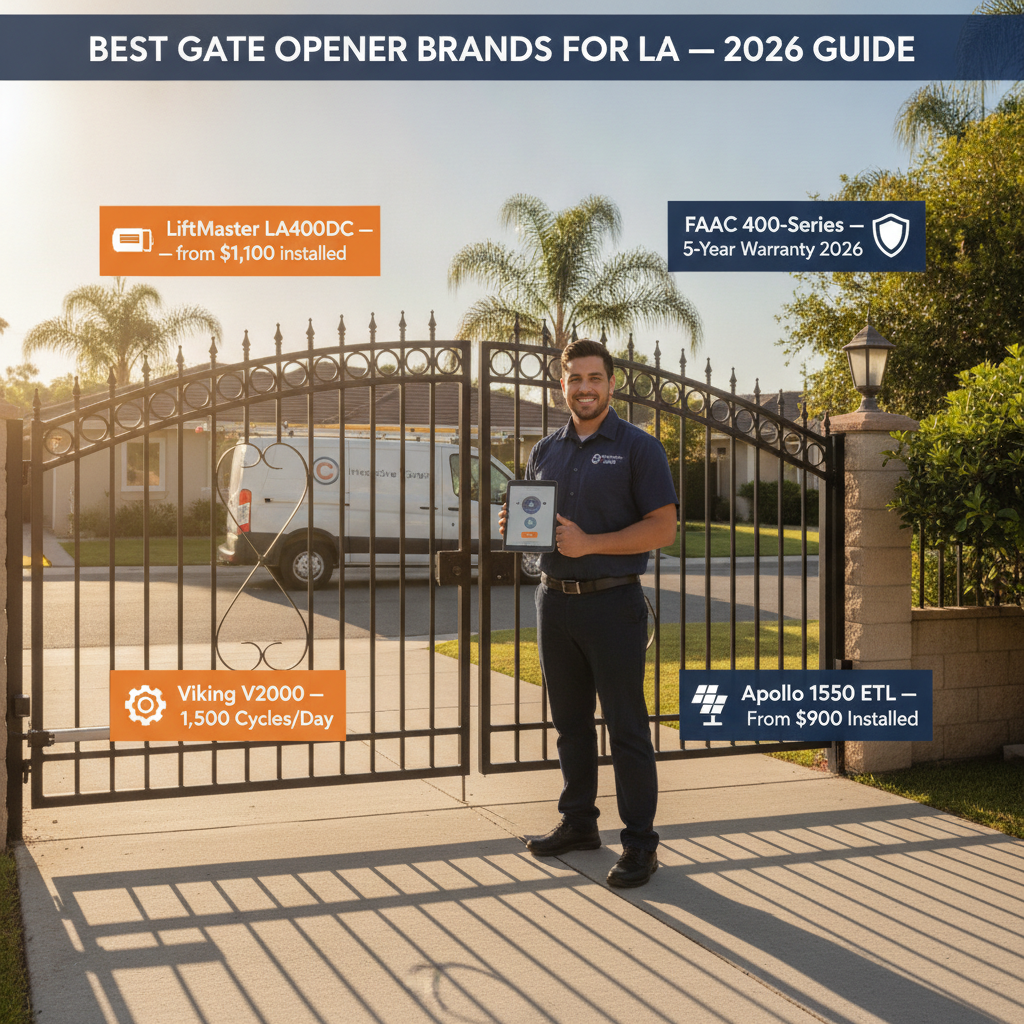
- UL 325-compliant operators from LiftMaster, FAAC, and Viking include internal torque limits that prevent motor burnout during sustained high-wind resistance, adding 3–5 years to motor lifespan.
- Most gate warranties are voided by wind damage if the gate was not installed to the local wind-load design standard — always request a copy of the engineering letter before signing off.
- Post embedment depth matters as much as gate design: LA County inspectors typically require 36–42 inches of concrete footing for swing gate posts on hillside lots.
Is Wind Load Actually a Problem for Gates in Los Angeles?
Most homeowners think of wind damage as a Seattle or Portland problem — all that Pacific Northwest rain and storm energy. But if you live near Laguna Beach, on the slopes of Rolling Hills, or anywhere from the Pomona Valley to the Antelope Valley, you already know the answer. Santa Ana winds are one of the most punishing wind events in North America. Gates that were installed without proper wind-load engineering are not just an inconvenience when they fail — they are a safety hazard and a liability. This guide covers exactly what wind ratings mean, which gate designs survive Southern California conditions, what the code actually requires in 2026, and what realistic costs look like for a properly engineered installation.
What Are Wind Load Ratings and Why Do They Matter for Electric Gates?
A wind load rating tells you how much lateral force — measured in pounds per square foot (psf) — a gate structure can resist before it deflects, warps, or collapses. The rating is determined by three inputs: design wind speed (mph), the gate panel's solidity ratio (how much surface area catches wind versus passes air through it), and the post-and-footing system that anchors everything to the ground.
In practical terms, a 6-foot-tall solid aluminum swing gate panel measuring 14 feet wide generates roughly 420–560 lbs of lateral force in a 75 mph gust. Double that in a 100 mph Santa Ana corridor. If the operator, hinges, and posts are not engineered for that load, something will break — and it is usually the operator arm, the hinge, or the post footing that goes first.
California Building Code (CBC 2022, still in force through 2026) adopts ASCE 7-22 wind provisions. For most of Los Angeles County, the basic wind speed for Risk Category II structures is 85–95 mph, but coastal and mountainous Exposure Category D and C zones — including much of Laguna Beach, Rolling Hills, and hillside communities in Los Angeles — use design wind speeds up to 110 mph.
What Wind Speeds Do Santa Ana Events Actually Produce Near My Neighborhood?
The National Weather Service has recorded the following peak gust data in recent Santa Ana events that is directly relevant to gate design decisions in 2026:
- Laguna Beach coastal ridges: 65–85 mph sustained, gusts to 100 mph during major events
- Rolling Hills and Palos Verdes Peninsula: 55–75 mph sustained, gusts to 90 mph in exposed locations
- San Gabriel Valley (Azusa, Glendora, Covina): 50–70 mph sustained, gusts to 85 mph in canyon-mouth communities
- Antelope Valley (Palmdale, Lancaster): 60–80 mph sustained, gusts exceeding 95 mph in open-terrain events
- San Fernando Valley (Chatsworth, Porter Ranch): 50–65 mph sustained, gusts to 80 mph
- City of Orange and inland Orange County: 45–60 mph sustained, gusts to 75 mph
- San Clemente coastal bluffs: 40–60 mph sustained, gusts to 70 mph
The takeaway: nearly every community Interactive Gates & Security serves in Southern California sits inside a zone where a gate will face real wind loading events at least once per season. Engineering is not optional in these markets.
How Does Gate Panel Design Affect Wind Load Resistance?
This is the single most important design decision homeowners overlook. Wind load is not just about how strong the frame is — it is about how much air the panel catches. Here is how common gate styles compare:
- Solid sheet metal or solid wood panels: 100% solidity ratio — the worst possible wind load scenario. These panels generate maximum lateral force and should only be used when protected by walls or in low-wind exposure zones. In high-wind areas they require dramatically oversized posts and footings.
- Ornamental picket gates (2-inch spacing): Roughly 60–70% open — significantly reduces wind force. A 14-foot picket gate at 75 mph generates approximately 160–200 lbs of lateral force versus 420+ lbs for a solid panel. This is the most popular residential choice in LA-area wind zones for good reason.
- Tubular steel or aluminum with wide spacing (3–4 inch): 70–80% open — the lowest wind load of any standard design. Ideal for Rolling Hills equestrian properties and Laguna Beach hillside homes where exposure is severe.
- Laser-cut decorative panels with geometric cutouts: Depends on the pattern, but typically 40–60% open. These look stunning and perform well if the cutout area is verified by the fabricator before installation.
Pro Tip: Ask your installer for the panel solidity ratio in writing before fabrication. A reputable fabricator can calculate the exact psf load for your gate dimensions and local design wind speed — this number should appear on the engineering letter that accompanies your permit application.
What Do LA County and City Building Departments Require in 2026?
Permit requirements for automated gates in Los Angeles vary by jurisdiction, but the 2026 baseline across most of the county follows CBC 2022 and UL 325. Here is what inspectors are looking for:
- Engineered footing plans: Hillside and coastal lots (Laguna Beach, Rolling Hills, San Clemente) almost always require a stamped engineer's letter specifying footing depth and concrete volume. Typical spec: 36–42 inch depth, 16–18 inch diameter, 3,000 psi concrete.
- Post sizing and embedment: For a 14-foot swing gate in a 95 mph design zone, a 4x4 steel post is inadequate — most engineers spec 4x6 or 6x6 HSS steel with 3/16 inch wall thickness minimum.
- Hardware rated for wind resistance: Hinges must be commercial grade (typically 4-inch ball-bearing hinges, stainless steel in coastal zones) and spaced at code-specified intervals based on gate weight and wind load.
- Operator selection: The operator must be rated for the gate weight plus a 20–30% wind-load safety factor. Undersized operators fail more frequently during wind events and can create entrapment hazards when gate resistance triggers torque cutouts repeatedly.
- UL 325 safety devices: Entrapment protection (photo eyes, edge sensors, or loop detectors) is mandatory regardless of wind rating — these must function correctly even if wind pushes the gate partially open.
Which Operator Brands Handle Wind-Resistance Load Best in Southern California?
Not all operators handle sustained resistance from wind the same way. Here is how the major brands perform in LA-area wind conditions as of 2026:
See real installations across the region in our project portfolio and read what homeowners say about performance after wind events on our reviews page.
What Does a Wind-Rated Gate System Cost in Los Angeles in 2026?
Here is a realistic installed price breakdown for common configurations, including engineering, hardware, operator, and labor:
Pro Tip: In high-wind exposure zones, a cantilever sliding gate almost always outperforms a swing gate on both wind resistance and long-term operator durability. The trade-off is that you need approximately 1.5x the gate width in clear space behind the opening for the gate to slide into — plan your driveway layout accordingly before committing to a style.
Interactive Gates & Security prices (late 2026): complete automatic gate systems run $9,000–$12,000 (Essential), $12,000–$20,000 (Smart) and $20,000–$30,000+ (Premium Estate), including the gate, operator, safety devices and access controls. HOA and commercial systems usually run above $20,000, and an opener on an existing gate (LiftMaster LA400) is $4,750 single or $6,290 double. Every line is on the itemized written quote after a free site visit.
How Do I Know if My Existing Gate Is Wind-Rated?
If your gate was installed before 2018 and you have never seen an engineering letter or wind-load specification, it was almost certainly not engineered to a specific wind standard. Signs your gate may be under-built for Southern California wind events include:
- The gate sags or drifts when winds exceed 30–40 mph
- The operator arm vibrates, chatters, or triggers its obstruction-detection cutout during windy conditions
- You can see visible flex in the gate frame when you push on the panel
- Hinge bolts have loosened or pulled partially out of wood or hollow-section posts
- The post has shifted, tilted, or cracked the surrounding concrete
- Your gate was installed without a permit, or the permit was pulled but no inspection was performed
If two or more of these apply, schedule a structural assessment before the next Santa Ana season. A professional inspection on a $400 repair visit can tell you whether reinforcement is feasible or replacement is more cost-effective. You can request a consultation through our contact page or start exploring gate options in our gate designer tool.
In One Minute: Wind Load Essentials for LA Homeowners
Santa Ana winds put real load on gates, especially solid panels, tall gates and wide swing leaves. Choose open or slatted designs in windy canyons, size posts and footings for the gate, use an operator with enough holding force and add a positive lock or drop rod for long wind events. Check hinges, posts and sensors after every big blow. A tune-up from Interactive Gates & Security is $225. Call (657) 312-3376.
Frequently Asked Questions
Does my residential gate in Los Angeles need to meet a wind load rating?
In most cases, yes. Any gate that requires a building permit — which includes virtually all automated gate installations in LA County — must comply with CBC 2022 wind provisions based on your site's exposure category and design wind speed. Even in areas where permits are not consistently enforced, an unrated gate in a high-wind zone creates homeowner liability if the gate fails and causes injury or property damage.
Is a sliding gate safer than a swing gate in high winds?
For most high-wind situations in Southern California, yes. A cantilever sliding gate does not apply torque loads to its posts during wind events the way a swing gate does, and there is no arm or hinge assembly to fail. The trade-off is the need for clear space behind the opening. In canyon-mouth communities like Azusa or Glendora where Santa Ana gusts are channeled and intensified, sliding cantilever gates are the preferred choice among experienced installers.
How deep do gate posts need to be in the ground for LA hillside properties?
Los Angeles County inspectors and structural engineers typically specify 36–42 inches of embedment depth with a concrete footing diameter of 16–18 inches for swing gate posts on hillside or coastal lots. Flat-lot residential installations in low-wind zones may be approved with 30-inch footings, but this varies by city jurisdiction. Never rely on a verbal estimate — ask for the footing spec in writing before installation begins.
Which gate materials hold up best to Santa Ana wind conditions?
Powder-coated steel and aluminum are the top performers. Steel offers higher strength-to-weight ratios for large span gates, while aluminum resists corrosion better in coastal salt-air environments (Laguna Beach, San Clemente, Palos Verdes). Wood gates are generally not recommended for high-wind zones because they warp, expand, and add unpredictable weight that can overwhelm operators and hinges. Wrought iron performs well structurally but requires diligent maintenance in coastal environments where salt accelerates rust.
What happens if my gate fails during a wind event — am I liable?
Potentially, yes. If a gate that was not properly engineered or permitted falls and damages a vehicle, injures a person, or blocks emergency access, the property owner can face civil liability. California courts have found property owners liable for foreseeable hazards on their property, and a gate in a known high-wind zone that was never engineered to resist those winds is a foreseeable hazard. This is one of the strongest practical arguments for investing in a properly permitted, wind-rated installation from the start.
How often should I service my gate specifically for wind-season readiness?
Once a year before Santa Ana season, usually early fall, and again after any major wind event. The tune-up checks hinges, posts, locks, sensors and the operator's force settings. An Interactive Gates & Security tune-up is $225.
Thinking About a Wind-Rated Gate for Your Property?
Whether you are on a Laguna Beach ridgeline, a Rolling Hills equestrian estate, or an inland Orange County tract home that has watched its neighbors' gates blow open one too many times, the right starting point is an honest site assessment. The team at Interactive Gates & Security has been installing and engineering gate systems across Southern California for years, and we can walk you through design options, permit requirements, and realistic costs for your specific location. Explore residential gate options, browse the portfolio, or reach out through the contact page when you are ready to get started. No pressure, just practical information.
FAQs
Interactive Gates & Security
Gates, fencing, metal work and access control since 2004
Washington · Seattle–Tacoma
(425) 900-6083Contact@interactivegates.com- Bellevue 12721 NE Bel Red Rd Ste 230, Bellevue, WA 98005Directions
- Lynnwood 16825 48th Ave W Ste 341, Lynnwood, WA 98037Directions
- Auburn 1608 2nd St NE, Auburn, WA 98002Directions
- Tacoma 5401 S Tacoma Way, Tacoma, WA 98409Directions
Oregon · Portland–Vancouver
(971) 351-9750Portland@interactivegates.com- Portland 555 SE Martin Luther King Jr Blvd Ste 2038, Portland, OR 97214Directions
- Lake Oswego 4800 Meadows Rd, Lake Oswego, OR 97035Directions
- Vancouver 1220 Main St #425, Vancouver, WA 98660Directions
Southern California · LA–Orange County
(657) 312-3376LosAngeles@interactivegates.com- Los Angeles 10880 Wilshire Blvd Suite 1101, Los Angeles, CA 90024Directions
- Rolling Hills Estates 609 Deep Valley Dr Suite 200, Rolling Hills Estates, CA 90274Directions
- Orange 1100 W Town and Country Rd Suite 1250, Orange, CA 92868Directions
- Dana Point 34231 Camino Capistrano, Dana Point, CA 92624Directions
Services
Residential gatesCommercial & HOA gatesGate repairGate openersFencingMetal workSmart securityWhy us
Since 2004 · 800+ gates installed10-year warranty on gates we buildLiftMaster Verified DealerBBB AccreditedFinancing through SynchronyAbout Interactive Gates & Security. Interactive Gates & Security is a family-owned gate, fence and access-control company serving homeowners, HOAs and businesses since 2004. We design, weld and install automatic driveway gates, commercial and HOA gates, fences, railings and custom metal work in our own metal shop, and we install and repair gate openers, keypads, intercoms and cameras of any brand. 800+ gates installed, 2,000+ customers, a 10-year warranty on gates we build, financing through Synchrony, and an itemized written quote before any work.
© 2026 Interactive Gates & Security · Washington, Oregon and Southern California. Interactive Gates & Security is a registered trade name of Blue Lake Construction LLC. Washington Contractor Registration #BLUELLC760C3.