- Swing gates suit flat driveways while slide gates are essential for hillside communities in Rolling Hills, Palos Verdes, and Malibu where grades exceed 5%.
- LiftMaster LA500UL and FAAC 760 are the two most-specified commercial operators for LA HOA projects in 2026, rated for 200,000+ cycles.
- Most LA County municipalities require a 20-foot vehicle stacking lane in front of entry gates — verify with your city before designing.
- Solar-backup operators are standard in fire-prone communities like Laguna Beach and San Clemente due to Public Safety Power Shutoff (PSPS) events.
- A full HOA gate replacement cycle (operator + access system + intercom) averages 12–18 years in Southern California's UV and salt-air environment.
- HOA board members should budget 1.5–2% of gate system value annually for preventive maintenance to stay within warranty terms.
What Does an HOA Gate System Actually Cost in Los Angeles in 2026?
What Types of Gates Do LA-Area HOAs Typically Install?
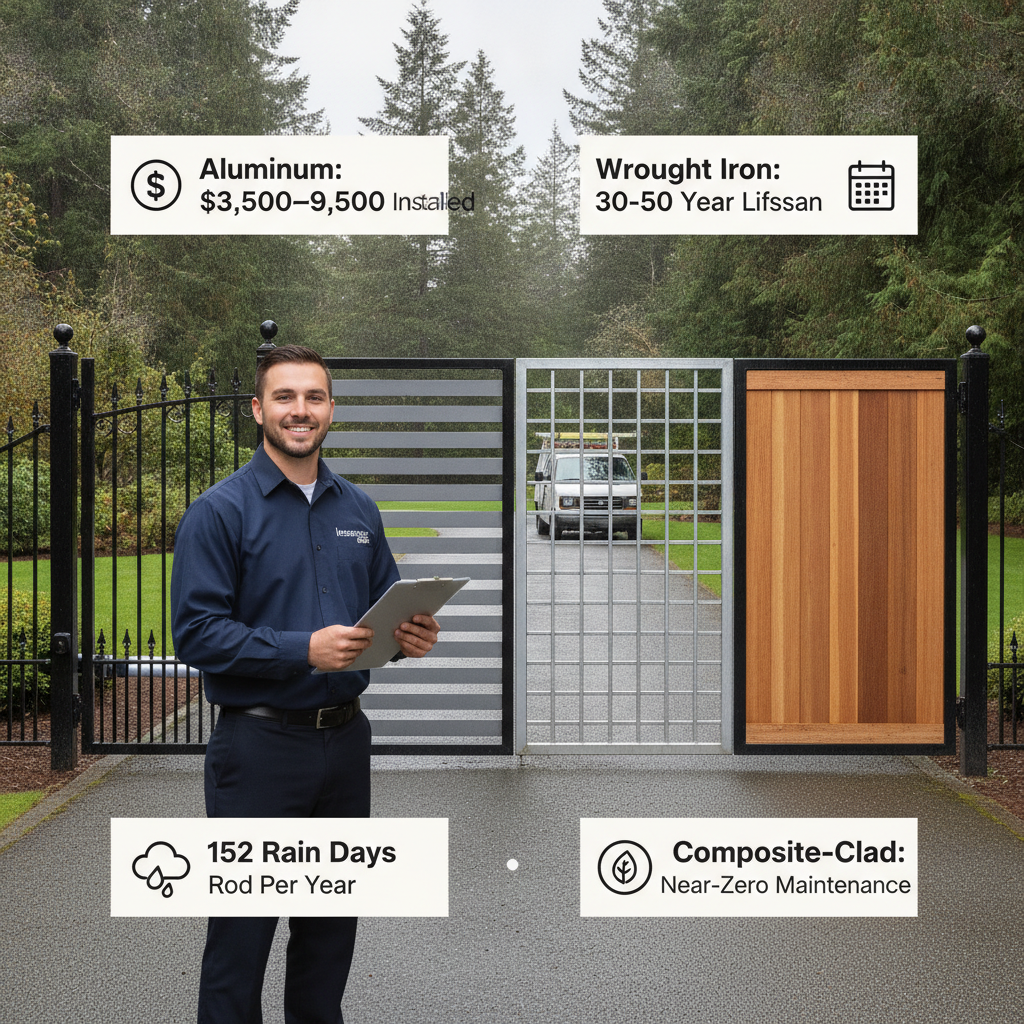
Los Angeles-area communities span everything from flat Orange County subdivisions to steep hillside enclaves above Laguna Beach. Gate type is the first and most consequential decision:
For a visual sense of gate styles that work in Southern California climates and streetscapes, the Interactive Gates gate designer tool lets HOA boards mock up different panel styles before committing to a design.
How Much Do Access Control Systems Cost for an LA HOA in 2026?
The gate panel and operator are only half the budget. Access control — how residents, guests, and vendors get in — often equals or exceeds the mechanical costs for a mature community.
Pro Tip: Don't size your access-control system only for today's unit count. If your HOA has any expansion phases or plans to add short-term rental management, choose a cloud platform that supports unlimited directory entries and mobile credentials — swapping platforms mid-lifecycle typically costs more than upgrading hardware at initial install.
Which Gate Operators Do LA HOAs Actually Use in 2026?
Residential-grade operators (LiftMaster 8500, Mighty Mule) are not appropriate for HOA use. Community gates need commercial-rated operators with higher duty cycles, UL 325 and UL 991 compliance, and entrapment protection systems.
- Elite (Chamberlain commercial line): Solid mid-tier option; SW3000 slide operator rated for 100,000 cycles. Common on 2015–2020 era installs that are now reaching first-major-service intervals.
For communities on a hillside or in a fire zone, solar-backup capability is non-negotiable. Both LiftMaster and FAAC offer UPS/solar battery backup kits (a client-specific quote–a client-specific quote installed) that keep gates operational through a PSPS outage — critical for evacuation access in communities near Laguna Beach or San Clemente.
What Are the Local Code Requirements for HOA Gates in Los Angeles?
Southern California has some of the most specific gate ordinances in the country. Before your board signs off on any design, confirm these items:
- Vehicle stacking: Most LA County unincorporated areas and cities require a minimum 20-foot stacking distance between the gate and the public right-of-way. Some cities (Irvine, Burbank) require 24 feet. Undersized stacking causes vehicles to queue onto the street — a code violation and a liability.
- ADA pedestrian access: Separate pedestrian gates must comply with ADA clear-width minimums (36 inches minimum, 42 inches preferred) and actuator height requirements. Push-button actuators must be mounted 15–48 inches AFF.
- UL 325 / UL 991 compliance: All operators must be UL 325 listed, and any access-control logic that controls entrapment-zone devices must meet UL 991. Your installer should provide documentation — don't accept verbal assurances.
See completed HOA and commercial projects our team has delivered across Southern California in our project portfolio.
Los Angeles is not one climate. Each micro-region creates different engineering demands:
- Coastal communities (Laguna Beach, San Clemente, Marina del Rey): Salt-air corrosion is severe. Aluminum and powder-coated steel panels outlast raw steel; stainless hardware is worth the premium. FAAC operators have sealed hydraulic chambers that resist salt ingress better than chain/screw-drive alternatives. Also budget for annual corrosion inspections.
- Fire-hazard severity zones (Topanga, Altadena, Coto de Caza): Solar/battery backup, Knox key switches, and emergency vehicle preemption are all but mandatory. Some HOA insurance policies now require documented fire-evacuation gate access plans.
- Urban/mixed-use (Downtown LA, Mid-Wilshire, Koreatown): High pedestrian traffic means frequent gate actuation — 300-500 cycles/day is not uncommon. Only continuous-duty operators (FAAC hydraulic) should be specified. Video intercoms with package-delivery management features are heavily favored.
- Orange County planned communities (Irvine, Mission Viejo, Aliso Viejo): Typically governed by CC&Rs with strict aesthetic standards. Gate panel design must be approved by an architectural review committee before installation begins. Budget an extra 2–4 weeks for ARB approval timelines.
Pro Tip: If your community is in a Very High Fire Hazard Severity Zone (VHFHSZ) as mapped by CAL FIRE, document your gate system's emergency override provisions in your HOA's Emergency Action Plan. Some insurers are now asking for this documentation at renewal.
Reserve fund studies in California (required under Civil Code §5550 for HOAs with 150+ units) must include gate systems as a major component with a defined useful life and replacement cost. Here is what the numbers look like in 2026:
For communities evaluating a new system or a full replacement, our HOA and commercial gate page outlines the full project process and what to expect at each phase.
What Access Control System Should an LA HOA Use in 2026?
Access control is where HOA gate projects have changed most dramatically in the last two years. Traditional telephone entry systems (DoorKing, Aiphone) are still installed and still work reliably, but cloud-based video intercoms now offer features that telephone systems simply cannot match: video verification of visitors, QR-code guest passes, delivery PIN codes, audit logs accessible from any browser, and integration with property management software.
DoorKing 1835/1836 telephone entry: Still the most cost-effective option for communities under 80 units where residents want simplicity. Residents add their phone number to the directory; visitors call from the keypad and press 9 (or a custom code) to open the gate. No app required, no internet dependency. Installed: a client-specific quote–a client-specific quote.
ButterflyMX video intercom: The leading cloud platform in LA-area HOA installs in 2026. Residents receive a call on their smartphone with live video from the entry panel; they can admit visitors with one tap. The system integrates with property management platforms including Yardi and RealPage. It also generates a time-stamped photo log of every entry event — valuable for liability and security reviews. The ButterflyMX panel replaces the traditional call box with a 7-inch touchscreen. Installed: a client-specific quote–a client-specific quote per entry lane, plus a SaaS subscription of approximately a client-specific quote–a client-specific quote/month per community.
Swiftlane and Verkada for large communities: Communities with 150+ units or luxury positioning often pair LPR cameras with a Swiftlane or Verkada access platform. License plates of registered residents are enrolled; the gate opens automatically as they approach. Guests receive a mobile credential or time-limited PIN. These systems require more IT infrastructure and ongoing administration, but they eliminate the 'tailgating' problem common at busy community entries. Full LPR + cloud-access system: a client-specific quote–a client-specific quote installed, plus subscription fees.
In One Minute: HOA Gate Systems in Los Angeles 2026
- Cantilever slide gates are the right choice for any community with grades over 5% — most of hillside LA.
- LiftMaster LA500UL and FAAC 760 are the dominant commercial operators; FAAC is preferred for heavy gates and coastal/high-cycle environments.
- Cloud intercoms (ButterflyMX, Callbox, Verkada) are the 2026 standard — they reduce property manager workload and support mobile credentials.
- LA County requires 20-foot vehicle stacking, Knox key switches, and UL 325/991 compliance on all new installs.
- Budget 1.5–2% of system value annually for maintenance, and include gate systems in your Civil Code §5550 reserve study.
- Solar/battery backup is non-negotiable in fire-zone and coastal communities subject to PSPS events.
Frequently Asked Questions: HOA Gate Systems in Los Angeles
How much does it cost to install a gate system for an HOA in Los Angeles?
A single-entry HOA gate system including operator, gate panel, access control, and intercom typically runs a client-specific quote–a client-specific quote for a smaller community with one lane. Multi-entry or dual-lane communities with LPR and cloud access control can reach a client-specific quote–a client-specific quote or more. Hillside or coastal communities add a client-specific quote–a client-specific quote in engineering and corrosion-resistant hardware costs.
What is the best gate operator for a high-traffic HOA in Southern California?
For communities with more than 150 daily cycles, a hydraulic operator like the FAAC 760 or FAAC 740 is the top recommendation because of its continuous-duty rating and sealed design that resists salt air and dust. For moderate-traffic communities (50–150 cycles/day), the LiftMaster LA500UL offers excellent performance at a lower installed cost with strong myQ cloud integration.
Do HOA gates in Los Angeles need to meet any specific fire safety codes?
Yes. LA County Fire requires a Knox key-switch or opticom emergency override on all new HOA gate installations. Communities in Very High Fire Hazard Severity Zones should also install battery or solar backup so gates can be opened during Public Safety Power Shutoff events. Some fire departments require documented emergency access plans — check with your local fire prevention bureau before finalizing your gate design.
How often do HOA gate operators need to be replaced in LA?
In typical Southern California HOA use (100–250 cycles/day), commercial-grade operators last 10–15 years before requiring full replacement. Coastal communities (Laguna Beach, San Clemente, Marina del Rey) may see 8–12 year lifespans due to salt-air corrosion. Semi-annual preventive maintenance extends lifespan and keeps warranties valid.
Can HOA boards in California be held liable for gate malfunctions?
Yes. California Civil Code and case law create a duty of care for HOA boards to maintain common-area access infrastructure. A gate that fails to reverse on an obstruction (violating UL 325) or traps a vehicle exposes the HOA to liability. Boards should require their installer to document UL 325/991 compliance at installation, perform annual safety-reversal tests, and keep maintenance records — all of which become exhibits in any liability defense.
What access control system is best for a large HOA in Los Angeles in 2026?
For communities of 50+ units, a cloud-based video intercom platform like ButterflyMX or Verkada Door paired with HID prox readers for resident vehicles is the 2026 best-practice configuration. For communities over 200 units or with high vendor/delivery traffic, adding Verkada or Openpath LPR for the resident lane reduces tailgating and eliminates the need to issue fobs to every resident. Total hardware cost for this configuration runs a client-specific quote–a client-specific quote per entry lane plus monthly SaaS fees.
Ready to Talk Through Your Community's Gate Project?
Whether your board is planning a first-time installation, replacing aging equipment, or just trying to build an accurate reserve fund line item, having accurate local numbers makes the process less stressful. Our team works with HOAs, property management companies, and developers across Los Angeles, the City of LA, Orange, Rolling Hills, Laguna Beach, and San Clemente. If you'd like a no-pressure site assessment and preliminary scope, reach out to our team — we're happy to walk your board through the options before any commitments are made.
FAQs